Home
Blog
Oppora’s Claude MCP is Live. Connect our Email Database & Outreach features with any tool to build smart automations inside Claude.
Home
Blog
Manasa Goli
Published July 11, 2026
15 min

Try Oppora AI
Create Self-Running Agentic Sales Workflows like N8N just by chatting with AI
Get Started for FREE
As your business grows, revenue operations become much harder to manage.
Your sales, marketing, and customer success teams start using different tools, data gets scattered across platforms, and manual work slows everyone down.
Instead of accelerating revenue, your tech stack becomes the bottleneck.
That's exactly why businesses invest in RevOps tools.
The right platform doesn't just automate repetitive tasks—it aligns teams, centralizes data, improves forecasting, and helps every revenue-generating function work toward the same goals.
In this guide, you'll discover:
Revenue Operations isn't powered by a single platform. Instead, it combines different types of tools that help sales, marketing, and customer success teams work together more efficiently.
Each category serves a specific purpose, from managing customer relationships and automating outreach to improving forecasting and analyzing revenue performance.
Together, these tools create a connected revenue engine that supports every stage of the customer lifecycle.
Here are the main types of RevOps tools you should know.
CRM tools act as the central source of customer data. They help teams manage contacts, track deals, monitor customer interactions, and maintain visibility throughout the sales pipeline.
Examples: Salesforce, HubSpot, Microsoft Dynamics 365 Sales
Sales engagement platforms automate outreach across multiple channels, helping sales teams manage email sequences, follow-ups, meeting scheduling, and prospect engagement more efficiently.
Examples: Oppora AI, Outreach, Salesloft
These tools help businesses discover target accounts, find decision-makers, enrich contact information, and prioritize high-intent prospects for outbound campaigns.
Examples: Apollo.io, ZoomInfo, Clearbit
Revenue intelligence platforms provide real-time insights into pipeline health, deal progress, and revenue forecasts. They help businesses make more informed decisions and identify potential risks before they affect revenue.
Examples: Clari, Gong
Workflow automation platforms connect different business applications and eliminate repetitive manual tasks by automatically moving data and triggering actions between systems.
Examples: Zapier, LeanData
Revenue growth doesn't stop after a sale. Customer success platforms help businesses improve customer retention, manage renewals, identify expansion opportunities, and increase customer lifetime value.
Examples: Gainsight
These platforms centralize business data and transform it into dashboards, reports, and actionable insights that help Revenue Operations teams monitor performance and make data-driven decisions.
Examples: Snowflake, Tableau
No single platform covers every aspect of Revenue Operations. Many businesses build a RevOps tech stack by combining multiple tools based on their sales process, reporting needs, and growth goals.
The best solution is one that integrates seamlessly with your existing systems while reducing manual work and improving collaboration across your revenue teams.
You can have a quick glance at the tools in this table.
Revenue Operations is about removing friction across the entire revenue process.
While many RevOps tools focus on reporting, CRM management, or sales analytics, outbound execution is equally important because it's where new revenue opportunities begin.
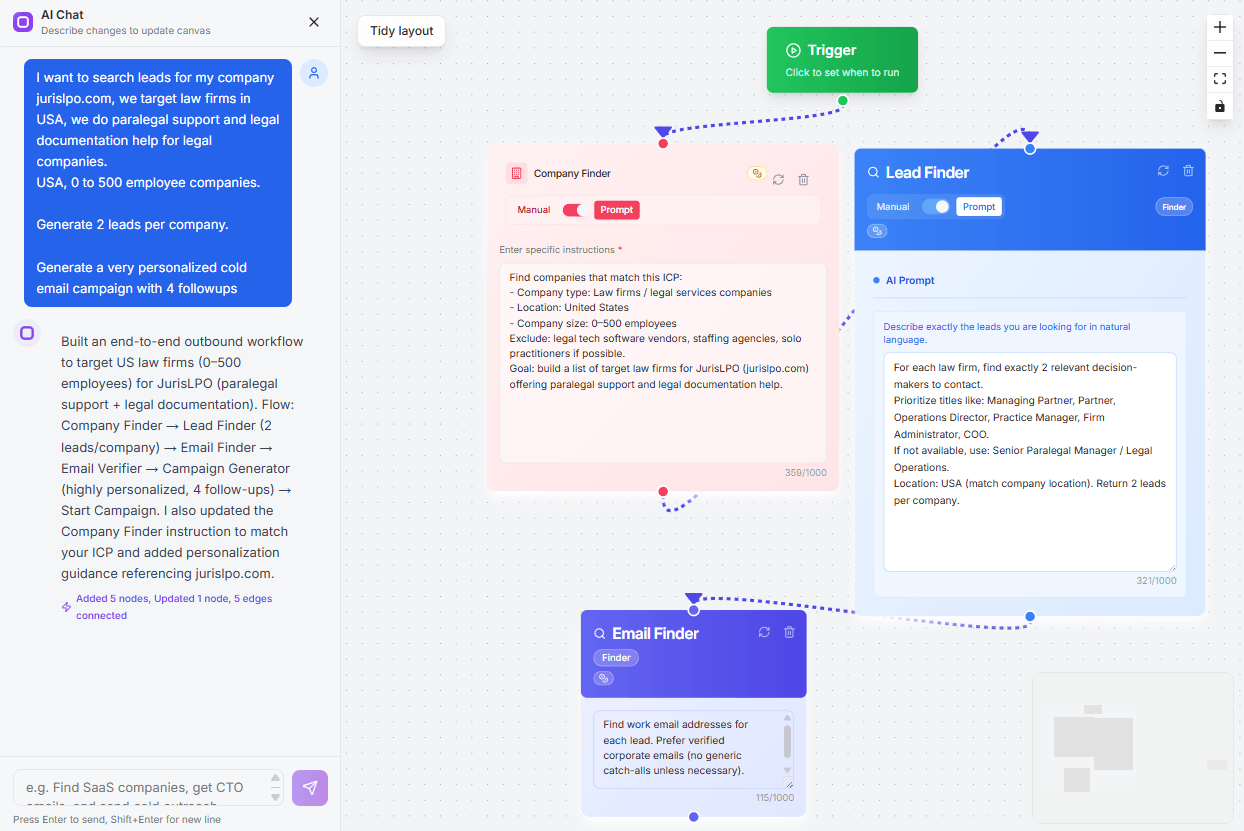
Oppora is an AI-powered outbound sales platform that automates the complete outbound workflow using interconnected AI Sales Agents.
From finding the right companies and decision-makers to enriching and verifying contact data, writing personalized emails, managing replies, booking meetings, and syncing everything with your CRM, it handles the repetitive work that typically requires multiple tools.
This makes Oppora more than just an outreach platform.
By connecting prospecting, outreach, CRM synchronization, and workflow automation into a single system, it helps revenue teams reduce manual effort, maintain cleaner data, and scale outbound efficiently—all of which are key goals of modern Revenue Operations.
As businesses grow, managing the entire revenue lifecycle becomes just as important as generating new opportunities.
Revenue teams need a platform that connects sales, pricing, contracts, billing, and forecasting to reduce operational bottlenecks.
Salesforce Revenue Cloud is an enterprise Revenue Operations platform designed to help businesses manage the complete quote-to-cash process.
Built on the Salesforce ecosystem, it enables organizations to streamline revenue workflows, improve forecasting accuracy, automate approvals, and maintain visibility across every stage of the customer journey.
Best For: Enterprise organizations managing complex sales processes and high-volume revenue operations.
Not every business needs an enterprise-grade RevOps platform.
Many growing companies benefit more from a solution that combines CRM, sales automation, and reporting without adding unnecessary complexity.
HubSpot Sales Hub is a CRM and sales engagement platform that helps revenue teams manage customer relationships, automate repetitive sales tasks, and keep marketing, sales, and customer success aligned.
Its intuitive interface and extensive automation features make it a popular choice for businesses building a scalable RevOps foundation.
Best For: Startups and small to mid-sized businesses looking for an easy-to-use RevOps platform.
Revenue Operations depends on accurate prospect data and efficient outreach. Without reliable contact information and streamlined prospecting, sales teams spend more time researching than selling.
Apollo.io is a sales intelligence and engagement platform that combines lead generation, contact enrichment, and outbound automation in one solution.
It helps revenue teams identify qualified prospects, enrich contact data, build outreach campaigns, and monitor engagement without relying on multiple disconnected tools.
Best For: Sales and RevOps teams focused on prospecting, lead generation, and outbound engagement.
As revenue teams grow, accurately predicting future revenue becomes more challenging.
Without clear visibility into pipeline health and deal progress, forecasting often relies on guesswork instead of data.
Clari is a Revenue Operations platform focused on revenue forecasting, pipeline management, and sales execution.
It helps businesses gain real-time visibility into their revenue pipeline, identify risks early, and make more informed decisions with AI-driven insights.
Best For: Mid-sized and enterprise businesses looking to improve forecasting accuracy and revenue visibility.
Suggested Reading:
12 Snov.io Alternatives Ranked by Features and PricingRevenue teams generate valuable customer insights every day through sales calls and meetings.
Capturing and analyzing those conversations can help improve sales performance and close more deals.
Gong is a revenue intelligence platform that records, analyzes, and summarizes customer interactions using AI.
It provides actionable insights into deals, coaching opportunities, and buyer behavior, helping Revenue Operations teams improve sales execution and forecasting.
Best For: Revenue teams that want to improve sales coaching, pipeline visibility, and deal execution.
As businesses generate more leads, routing them to the right sales representatives quickly becomes essential.
Manual lead assignment can create delays, duplicate work, and missed revenue opportunities.
LeanData is a Revenue Operations platform that automates lead routing, account matching, and workflow orchestration.
It ensures every lead reaches the right owner based on predefined rules, helping sales teams respond faster while maintaining clean CRM data.
Best For: Organizations that want to automate lead management and improve CRM data accuracy.
Revenue Operations depends on high-quality data to fuel prospecting, account planning, and pipeline growth.
Having access to accurate business information helps teams target the right buyers more effectively.
ZoomInfo is a B2B sales intelligence platform that provides extensive company and contact data, buying intent signals, and organizational insights.
It enables Revenue Operations teams to build targeted prospect lists, enrich CRM data, and support more effective outbound campaigns.
Best For: Sales and RevOps teams that rely on high-quality prospect data and account intelligence.
Scaling outbound sales requires more than sending emails. Revenue teams need structured workflows that keep prospects engaged while giving managers visibility into campaign performance.
Outreach is a sales engagement platform that helps Revenue Operations teams automate multi-channel outreach, manage sales sequences, and track engagement across the entire sales process.
It combines automation, analytics, and AI-powered recommendations to improve productivity and pipeline generation.
Best For: Growing sales organizations looking to scale outbound engagement with structured sales workflows.
Building a consistent sales process is essential for scaling revenue.
Without a structured approach to prospect engagement, follow-ups can be missed, response times slow down, and opportunities slip through the pipeline.
Salesloft is a sales engagement platform that helps Revenue Operations teams streamline outreach, automate repetitive tasks, and improve sales productivity. It enables sales teams to manage multi-channel engagement while providing managers with insights into pipeline performance and team activity.
Best For: Sales organizations looking to standardize outreach and improve sales execution.
Maintaining accurate customer and company data is a key part of Revenue Operations. Better data helps sales and marketing teams personalize outreach, improve lead qualification, and make smarter decisions.
Clearbit is a data enrichment platform that enhances customer and company records using real-time business intelligence. It helps Revenue Operations teams automatically enrich CRM data, identify website visitors, and build more complete customer profiles for sales and marketing initiatives.
Best For: Businesses looking to improve CRM data quality and customer insights.
Revenue teams often rely on multiple tools to manage prospecting, sales, marketing, and customer success.
Connecting these applications can eliminate repetitive tasks and improve operational efficiency.
Zapier is a no-code automation platform that integrates thousands of business applications through automated workflows.
It helps Revenue Operations teams reduce manual work by automatically moving data between tools, triggering actions, and streamlining everyday business processes.
Best For: Businesses looking to automate repetitive workflows across their revenue tech stack.
Revenue Operations relies on accurate customer data to deliver consistent experiences across sales, marketing, and customer success.
When customer information is scattered across different platforms, maintaining a unified view becomes difficult.
Segment is a customer data platform (CDP) that collects, organizes, and synchronizes customer data from multiple sources.
It provides Revenue Operations teams with a centralized customer profile, making it easier to personalize engagement, improve reporting, and maintain data consistency across business systems.
Best For: Organizations that need a centralized customer data platform to support Revenue Operations.
Scaling revenue doesn't stop after acquiring new customers. Retaining existing customers and driving expansion are equally important parts of a successful Revenue Operations strategy.
Gainsight is a customer success platform that helps businesses improve customer retention, increase renewals, and identify expansion opportunities.
It gives Revenue Operations and customer success teams the insights needed to proactively manage customer relationships throughout the entire lifecycle.
Best For: SaaS companies and businesses focused on improving customer retention and long-term revenue growth.
Responding to inbound leads quickly can make the difference between winning and losing a potential customer.
Delays in lead routing or meeting scheduling often result in missed opportunities and slower sales cycles.
Chili Piper is an inbound conversion and scheduling platform that helps Revenue Operations teams automate lead routing, qualification, and meeting booking.
By connecting prospects with the right sales representatives instantly, it reduces response times and improves conversion rates.
Best For: Businesses looking to improve inbound lead conversion and streamline meeting scheduling.
Suggested Reading:
10 Best Kaspr Alternatives for Better B2B Lead GenerationAs businesses scale, revenue data is often spread across CRMs, marketing platforms, support tools, and financial systems. Bringing this information together is essential for accurate reporting and better decision-making.
Snowflake is a cloud data platform that enables Revenue Operations teams to centralize, store, and analyze large volumes of business data.
It provides a single source of truth for reporting, forecasting, and advanced analytics across the entire revenue organization.
Best For: Mid-sized and enterprise organizations managing large-scale revenue data and analytics.
Revenue teams generate data from every stage of the customer journey, but turning that information into actionable insights requires powerful visualization and reporting tools.
Tableau is a business intelligence platform that helps Revenue Operations teams analyze revenue performance, monitor key metrics, and build interactive dashboards.
Its visualization capabilities make it easier to identify trends, measure team performance, and support data-driven decision-making.
Best For: Organizations that need advanced reporting and business intelligence for Revenue Operations.
Revenue Operations teams need a platform that combines customer relationship management, sales automation, and AI insights to improve productivity and support long-term growth.
Microsoft Dynamics 365 Sales is a CRM and sales automation platform that helps businesses manage customer relationships, streamline sales processes, and gain deeper visibility into pipeline performance. Its seamless integration with the Microsoft ecosystem makes it a popular choice for organizations already using Microsoft business applications.
Best For: Businesses using the Microsoft ecosystem that want an integrated CRM and Revenue Operations solution.
With so many RevOps tools available, choosing the right one comes down to your business goals, team size, and existing technology stack.
Instead of looking for the platform with the longest feature list, focus on the one that solves your biggest operational challenges.
Start by understanding where your revenue process needs the most improvement.
If your biggest challenge is generating qualified leads, a sales intelligence or outbound automation platform may be the right choice. If forecasting or pipeline visibility is the issue, a revenue intelligence platform will likely deliver more value.
Your RevOps tool should work seamlessly with your existing CRM, marketing platform, communication tools, and analytics software.
The fewer disconnected systems your team has to manage, the more efficient your revenue operations become.
Automation is one of the biggest benefits of modern RevOps software.
Choose a platform that can automate repetitive tasks such as lead routing, CRM updates, follow-ups, reporting, or customer communication. This allows your team to spend more time building relationships and closing deals.
Revenue decisions are only as good as the data behind them.
Look for tools that provide data enrichment, contact verification, deduplication, and CRM synchronization to keep your customer information accurate and up to date.
The right RevOps platform should support your business as it grows.
Whether you're adding more sales representatives, managing larger prospect lists, or expanding into new markets, your software should scale without requiring frequent migrations or replacing your existing workflows.
The right revops tools can do much more than automate individual tasks.
They help sales, marketing, and customer success teams work together with accurate data, connected workflows, and better visibility into the entire revenue process.
Whether you need a CRM, revenue intelligence platform, customer success solution, or AI-powered outbound sales platform, the best choice depends on your team's goals and operational challenges.
As your business grows, investing in tools that improve collaboration, automate repetitive work, and provide actionable insights will help you build a more efficient and scalable revenue engine.
A CRM primarily stores and manages customer information, while a RevOps tool focuses on optimizing the entire revenue process. Many RevOps platforms include CRM capabilities or integrate with existing CRMs, but they also support automation, forecasting, reporting, lead management, and cross-team collaboration.
Yes. Small businesses often benefit the most because RevOps tools reduce manual work and eliminate the need for multiple disconnected applications. Many platforms also offer scalable plans that grow alongside your business.
Yes. Most modern RevOps tools provide real-time pipeline visibility, revenue analytics, and AI-powered forecasting to help businesses predict revenue more accurately and identify risks before they impact sales performance.
No. Revenue Operations brings together sales, marketing, and customer success teams. A good RevOps platform improves collaboration across departments by centralizing customer data, automating workflows, and providing shared reporting.
Traditional platforms often automate individual tasks such as CRM updates or email sequences. AI-powered RevOps tools go further by automating complete workflows, including prospecting, lead enrichment, outreach, follow-ups, reply management, and reporting with minimal manual involvement.
The best RevOps tool should offer workflow automation, CRM integration, accurate data enrichment, reporting, forecasting, collaboration features, and the ability to scale with your business. AI capabilities and automation can also help improve productivity as your revenue operations grow.
Yes. Many businesses build a RevOps tech stack by combining CRM software, sales engagement platforms, customer data platforms, and analytics tools. However, choosing platforms that integrate well can reduce complexity and improve operational efficiency.
If your teams rely on multiple disconnected systems, spend significant time on manual processes, struggle with inconsistent customer data, or have limited visibility into revenue performance, it's a strong indication that a RevOps tool can help streamline operations and support scalable growth.
Summarize with AI
Share