Home
Blog
Oppora’s Claude MCP is Live. Connect our Email Database & Outreach features with any tool to build smart automations inside Claude.
Home
Blog
Manasa Goli
Published May 22, 2026
6 min

Try Oppora AI
Create Self-Running Agentic Sales Workflows like N8N just by chatting with AI
Get Started for FREE
You spend hours building a strong LinkedIn prospect list.
The titles match your ICP, the companies look relevant, and the intent feels right. But the moment you move toward outreach, the real problem starts.
Most LinkedIn profiles do not show verified work emails. And manually finding emails for hundreds or thousands of prospects quickly becomes messy.
You end up dealing with:
The bigger your list gets, the harder it becomes to maintain data quality at scale.
In this guide, you’ll learn:
LinkedIn is excellent for finding the right people.
But it is not designed to be your complete outbound database.
You can identify decision-makers, filter by role, industry, company size, or hiring activity. Yet when it’s time to actually contact those prospects, you still need verified work emails.
That gap creates friction in outbound workflows.
A LinkedIn profile may look active, but that does not guarantee:
This becomes a much bigger issue when you are handling large lead lists.
Even a small percentage of invalid emails can damage deliverability across campaigns.
Finding 20 emails manually is manageable.
Finding and verifying 10,000 work emails is a completely different process.
At scale, teams usually struggle with:
That is why modern outbound teams focus heavily on enrichment automation and verification accuracy.
Not all discovered emails are verified emails.
This distinction matters more than most teams realize.
A tool may generate an email pattern based on a company domain, but that does not confirm the mailbox is deliverable.
Most modern enrichment systems validate emails through layers such as:
This process reduces the chance of sending emails to invalid or risky inboxes.
When you send cold emails to unverified contacts, you increase:
Over time, this affects campaign performance even if your messaging is strong.
That is why verified enrichment is no longer optional for outbound at scale.
Suggested Reading:
Outbound Lead Generation Tools Tested for Real ResultsOnce your LinkedIn list is ready, the next step is building a workflow that helps you enrich and verify contacts efficiently without slowing down your outbound process.
Here’s the workflow most outbound teams follow when scaling LinkedIn email enrichment.
Everything starts with building a targeted prospect list.
Most teams usually collect leads through:
The goal here is simple: focus on relevant prospects before enrichment starts.
Better targeting usually leads to higher email match rates and better campaign performance later.
Once your LinkedIn prospects are imported, enrichment tools start finding work email addresses connected to those profiles.
Most tools use a combination of:
At scale, automation becomes important because enrichment volume grows quickly.
Instead of finding emails manually, bulk enrichment helps teams process hundreds or thousands of prospects in minutes.
This is also where workflow efficiency matters. Slow enrichment systems often create bottlenecks for outbound teams running high-volume campaigns.
This is one of the most important steps in the entire workflow.
Even if an email is found successfully, it still needs verification before outreach begins.
Without verification, campaigns can suffer from:
Verification helps filter out:
This keeps outreach campaigns cleaner, safer, and more reliable.
Once emails are verified, contacts can move directly into outbound workflows.
This usually includes:
The biggest advantage here is operational efficiency.
Instead of manually cleaning spreadsheets or switching between multiple tools, verified contacts move directly into campaigns ready for outreach.
This creates a much smoother outbound workflow as your prospecting volume grows.
Many outbound workflows fail because teams optimize for volume before data quality.
That usually creates deliverability problems later.
One tool for LinkedIn extraction.Another for email finding.Another for verification.Another for outreach.
This fragmented workflow slows teams down and increases operational costs.
Pattern-based enrichment without verification often leads to high bounce rates.
Just because an email format exists does not mean the inbox is active.
Some platforms use shared credits across:
That means heavy usage in one area can block the entire workflow.
For teams enriching large LinkedIn lists, this becomes expensive very quickly.
As outbound workflows become larger, teams usually look for ways to reduce tool switching and simplify enrichment operations.
That is where platforms like Oppora become useful.
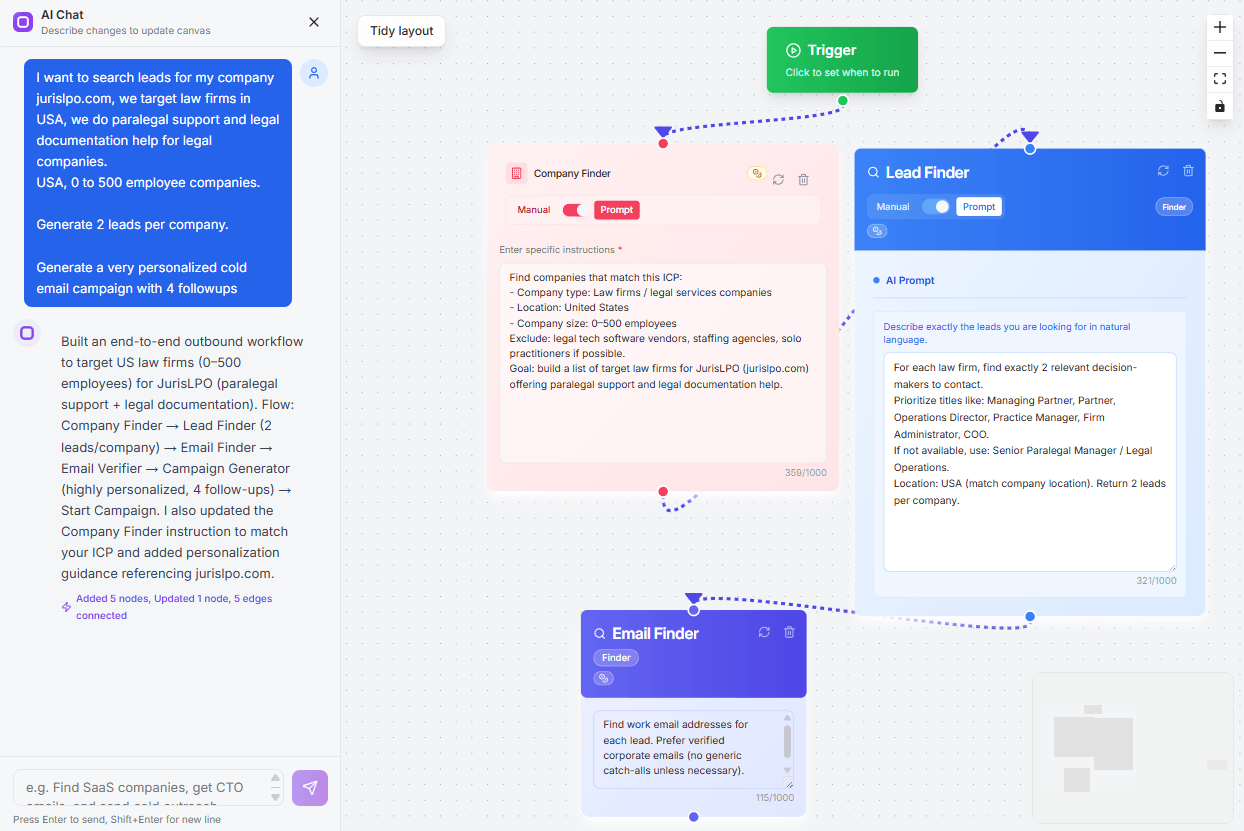
Instead of splitting prospecting, enrichment, verification, and outreach across multiple tools, Oppora combines them into one workflow.
Many tools use one shared credit pool for everything.
Oppora separates credits for:
This gives teams better control over scaling outreach operations.
If you are enriching LinkedIn lists at scale, workflow flexibility matters just as much as data quality.
Oppora supports:
This makes large-volume prospecting more manageable for outbound teams.
Teams often outgrow tools that limit workflows or force plan upgrades too early.
Oppora also offers smaller add-on pricing packs for enrichment and verification, which helps teams scale without immediately moving to higher plans.
Enrichment quality improves significantly when your prospecting process is clean from the beginning.
A few operational improvements can make a major difference.
Better targeting improves both:
Avoid broad prospect lists whenever possible.
Even recently enriched emails can become invalid over time.
Verification should happen right before outreach whenever possible.
Large databases decay quickly.
Cleaning lists regularly helps maintain sender reputation and campaign performance.
Even verified emails should be approached carefully when scaling outbound.
Warm up domains and increase sending gradually to maintain inbox placement.
Building LinkedIn prospect lists is only the first step.
The real challenge starts when you need to enrich LinkedIn lists with verified work emails at scale without damaging deliverability or slowing your workflow.
That requires more than just finding emails.
You need:
The teams that solve these operational gaps usually see better reply rates, lower bounce rates, and more predictable outbound performance.
Summarize with AI
Share