Home
Blog
Oppora’s Claude MCP is Live. Connect our Email Database & Outreach features with any tool to build smart automations inside Claude.
Home
Blog
Manasa Goli
Published May 22, 2026
7 min
Try Oppora AI
Create Self-Running Agentic Sales Workflows like N8N just by chatting with AI
Get Started for FREE
Most outbound sales teams still manage outreach manually.
They scrape or buy lead lists, write emails one by one, send follow-ups in batches, and track replies across spreadsheets or CRMs.
At small scale, this process can work.
But once outreach volume increases, things quickly become difficult to manage.
Leads become disorganized. Follow-ups get delayed. Personalization becomes inconsistent. And high-value prospects often slip through the cracks.
That’s where automated outreach workflows completely change the process.
Instead of manually handling every step, businesses create structured systems that manage lead sourcing, personalization, sequencing, follow-ups, and reply handling automatically.
The result is a scalable outbound engine that continuously generates conversations without increasing manual workload.
In this guide, you’ll learn:
An email automation workflow is a structured system that manages outbound communication, follow-ups, personalization, and prospect engagement automatically.
Unlike inbound workflows that react to user actions like signups or downloads, outbound workflows begin with prospect targeting and outreach initiation.
A typical workflow looks like this:
For example:
This is what makes modern outreach scalable. Instead of manually tracking every lead, the system manages engagement automatically.
Outbound email remains one of the most effective B2B growth channels when executed correctly.
But without automation, teams often struggle with:
Automated outreach systems solve this by enabling:
The biggest advantage is consistency.
Your outreach system continues running even while your sales team focuses on meetings and closing deals.
Outbound automation systems rely on multiple connected components working together.
Here are the essential elements every workflow needs.
Every outreach workflow starts with identifying the right prospects.
Lead sources commonly include:
The quality of your prospect list directly affects campaign performance.
Before emails are sent, contact data should be validated and enriched.
This usually includes:
Without clean data, deliverability and reply rates suffer significantly.
Different prospects require different messaging.
Segmentation allows businesses to group leads based on:
This makes outreach more relevant and improves engagement.
Personalization is one of the biggest drivers of outbound performance.
Common personalization elements include:
The goal is to make emails feel relevant rather than mass-produced.
Most outbound campaigns rely on multi-step sequences instead of single emails.
A typical sequence may include:
Each email should continue the conversation naturally instead of repeating the same pitch.
As campaigns scale, reply management becomes critical.
Workflow automation can:
This prevents missed opportunities and keeps communication organized.
Outbound email performance depends heavily on inbox placement.
Important deliverability controls include:
Without proper deliverability management, even strong campaigns can fail.
Suggested Reading:
Buyer Intent Signals B2B Sales Teams Should WatchBuilding an effective outreach system is really about creating a repeatable process that consistently generates conversations.
Instead of manually sending one-off emails, businesses create workflows where prospecting, personalization, follow-ups, and reply handling work together automatically.
Here’s how the process usually works.
Start by identifying exactly who you want to target.
This may include factors like:
A clear ICP helps improve targeting accuracy and response quality.
Next, collect leads from platforms like LinkedIn, B2B databases, or internal CRM systems.
Before launching outreach, verify and enrich the data.
This step typically includes:
Clean data protects sender reputation and improves deliverability.
Outbound emails perform better when messaging feels relevant.
Instead of using generic templates, tailor messaging based on:
Even lightweight personalization can significantly improve reply rates.
Most outbound systems use structured sequences.
A typical sequence may include:
The goal is to gradually build familiarity and trust over multiple touchpoints.
This is where workflows become intelligent.
For example:
Automation allows teams to manage large-scale outreach efficiently.
After launch, monitor important performance metrics such as:
Regular optimization helps improve campaign results over time.
Here are some practical workflow examples modern sales teams commonly use.
This workflow targets a highly specific prospect segment.
Typical flow:
This improves targeting precision and outreach relevance.
This workflow focuses on personalization at scale.
Typical flow:
This approach works especially well for high-value outbound campaigns.
As outreach volume increases, managing replies manually becomes difficult.
Typical flow:
This keeps lead handling organized and efficient.
Not every engaged prospect is ready to buy immediately.
Typical flow:
This helps sales teams focus on better opportunities.
Modern outreach often combines multiple communication channels.
Typical flow:
Using multiple touchpoints can improve response rates significantly.
Some prospects may ignore the initial sequence but engage later with a different angle.
Typical flow:
This helps recover previously inactive prospects.
Suggested Reading:
75+ Re-Engagement Email Subject Lines That Work in 2026AI-powered systems automate large portions of outbound execution.
Typical flow:
This allows teams to scale outreach while maintaining personalization.
Traditional outbound systems often require multiple disconnected tools for:
This creates fragmentation and operational complexity.
Modern AI-powered platforms combine these functions into a single workflow system.
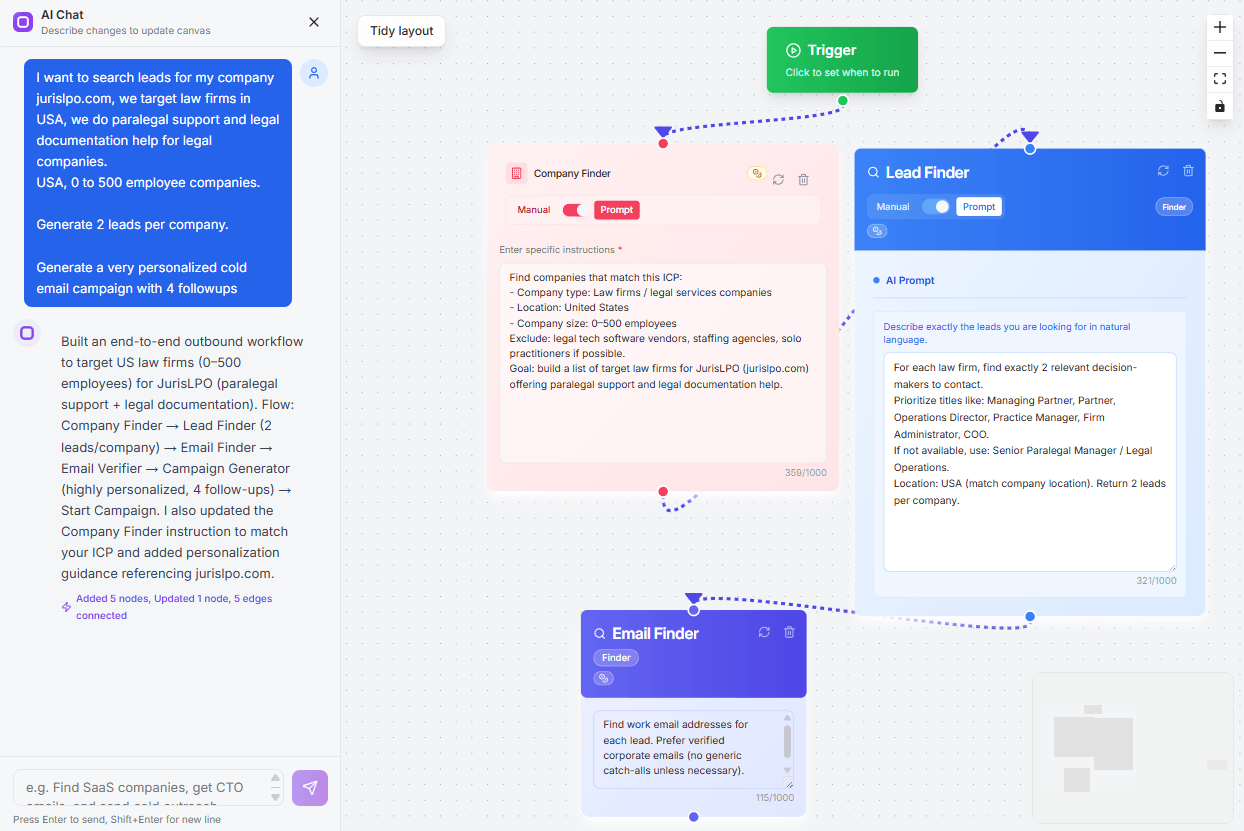
For example, platforms like Oppora can:
This transforms outbound outreach into a continuously running sales system instead of a heavily manual process.
Email automation workflows are not just about sending more emails faster.
They’re about building scalable outbound systems that:
Start with one workflow first.
Optimize it consistently.
Then gradually scale it into a repeatable outbound engine that continuously generates qualified pipeline opportunities.
There’s no fixed number.
Some campaigns perform well with 3–4 emails, while others may require 6–8 touchpoints depending on the audience and sales cycle.
The focus should always remain on relevance and timing.
Yes.
Even small sales teams can automate prospecting, follow-ups, lead routing, and personalization without needing large outbound teams.
One of the most common mistakes is scaling too quickly without proper segmentation or personalization.
This often leads to poor engagement and deliverability issues.
Most teams review and optimize performance weekly or bi-weekly based on reply rates, deliverability metrics, and conversion performance.
Summarize with AI
Share