Home
Blog
Oppora’s Claude MCP is Live. Connect our Email Database & Outreach features with any tool to build smart automations inside Claude.
Home
Blog
Adam Hossain
Published April 15, 2026
15 min
Try Oppora AI
Create Self-Running Agentic Sales Workflows like N8N just by chatting with AI
Get Started for FREE
Most B2B emails get ignored because they feel generic, poorly timed, or overly sales-driven.
That’s where account based marketing emails change the game.
Instead of blasting messages, you focus on relevance, context, and real conversations with specific accounts.
In this guide, you’ll find practical ways to improve your outreach using proven approaches:
Suggested Reading:
15+ Best FREE Email Marketing Templates You Can Use Right Now (With Real Examples That Convert)Before you look at examples, it’s important to understand why some ABM emails get replies while others get ignored.
It usually comes down to three things working together: how relevant your message feels, when it reaches the prospect, and how easy it is to respond.
Most outreach fails because it stops at surface-level personalization like using a first name or company name.
Strong ABM emails go deeper and reflect actual context.
This could include:
When your email reflects real understanding, it doesn’t feel like outreach.
It feels like a thoughtful message written specifically for them, which naturally builds trust and increases response rates.
Even a well-written email can fail if it arrives at the wrong time.
ABM works best when your outreach aligns with something already happening inside the account.
Common high-impact signals include:
When your message connects to these moments, it feels timely and logical.
Instead of interrupting, you’re joining an ongoing situation, which makes prospects more open to engaging.
Many emails lose attention because they try to do too much or push for a meeting too early.
Effective ABM emails focus on one clear idea.
They usually:
This approach reduces pressure and makes it easier for prospects to reply.
Instead of feeling sold to, they feel invited into a conversation, which is exactly the goal of ABM outreach.
Now that you understand what makes ABM emails effective, the next step is knowing which type of email to use in different situations.
Not every outreach should look the same.
Your approach should change based on where the account is in the conversation and what you’re trying to achieve.
Cold outreach is where most ABM campaigns begin, especially when targeting high-value accounts.
But unlike traditional cold emails, the goal here isn’t to pitch.
It’s to start a relevant conversation.
These emails work best when they are:
When done right, cold outreach doesn’t feel cold.
It feels like a thoughtful message that earns attention instead of demanding it.
Most responses don’t happen on the first email.
That’s why follow-ups are not just reminders, they are opportunities to add value.
Instead of repeating your original message, each follow-up should introduce something new.
This could be:
When follow-ups evolve the conversation, they feel intentional.
This keeps your outreach fresh and increases the chances of getting a reply over time.
Not every email needs to ask for a response immediately.
Sometimes, the goal is to warm up the account gradually.
That’s where content and event-based emails come in.
These emails typically share:
They position you as helpful rather than sales-focused.
Over time, this builds familiarity and trust, making future outreach feel more natural and welcomed.
Even strong conversations can go cold.
Re-engagement emails help you restart those conversations without sounding repetitive or pushy.
The key here is to acknowledge the gap and bring something new into the conversation.
This could be:
When done well, re-engagement emails feel respectful and relevant.
They give the prospect a clean and comfortable way to respond again without pressure.
Knowing the theory is helpful, but real progress comes from using proven templates in the right situations.
Below are practical account based marketing email examples you can apply across different stages of your outreach.
Each one is designed to be simple, relevant, and easy to adapt, so you can start conversations faster without overthinking your messaging strategy.
This is one of the most effective account based marketing email examples because it focuses on relevance from the very first touchpoint.
It helps you stand out in crowded inboxes by showing that your message is based on real context, not mass outreach. This approach makes your email feel intentional and increases the chances of starting a genuine conversation.
Use this when reaching out to a new high-value account where no prior interaction exists.
Hi {first_name},
Noticed {specific observation about company}.
Curious how you're currently handling {related problem}?
Saw a few teams facing similar issues with {brief insight}.
Worth a quick chat?
— {your_name}
This email shows real effort by using specific context instead of generic messaging.
It makes your outreach feel intentional, which helps build trust quickly and increases the chances of starting a meaningful conversation.
This type of email works best when your outreach is tied to something already happening inside the target account.
Instead of reaching out randomly, you connect your message to a real event, which makes it feel timely and relevant. This is why trigger-based emails often perform better than generic cold outreach.
Use this after events like funding announcements, hiring spikes, product launches, or expansion into new markets.
Hi {first_name},
Saw you recently {trigger event}.
Usually, teams at this stage run into {specific challenge}.
Curious if that’s something you're seeing too?
— {your_name}
Why It Works
Timing plays a huge role in engagement, and this email aligns perfectly with that.
It feels natural because you’re referencing a real situation, making your message more relevant and easier for the prospect to respond to.
This email works well when a company is actively hiring, which usually signals growth and upcoming operational challenges.
Instead of reaching out randomly, you connect hiring activity to specific problems teams often face while scaling. This makes your message feel logical and grounded in real business context.
Use this when a company is hiring for roles in sales, marketing, or operations that indicate expansion.
Hi {first_name},
Saw you're hiring for {role}.
When teams scale like this, outreach usually gets messy.
How are you managing it right now?
— {your_name}
Hiring is a strong intent signal, and this email connects it directly to a relevant challenge.
It feels natural because you’re not guessing, you’re responding to something visible, which increases credibility and makes it easier for prospects to engage.
Sometimes, the simplest emails perform the best.
Instead of trying to impress, you focus on one clear problem your prospect already understands and deal with daily.
Use this when you’re confident about a common challenge in your target industry or role.
This works especially well when the problem is obvious but not actively discussed.
Hi {first_name},
Quick question —Are you facing {specific problem}?
Seeing this come up often with {industry/role}.
Curious how you're handling it.
— {your_name}
It immediately connects with something real, making your message feel relevant without needing extra explanation.
Because the email is short and focused, it reduces friction and makes it easier for the prospect to reply without overthinking.
Not every email needs a question or a pitch to start a conversation.
Sometimes, sharing a small but relevant insight is enough to spark interest and position you as someone who understands what’s happening in their space.
Use this when you have a clear observation, trend, or pattern that directly relates to your target account.
It works best when you want to lead with value instead of asking for something upfront.
Hi {first_name},
Noticed something interesting —
Teams in {industry} are seeing {specific insight}.
Thought it might be relevant for you.
Worth sharing more?
— {your_name}
It shifts the dynamic from selling to helping, which makes your outreach feel more natural and less intrusive.
By leading with insight, you build credibility early and make it easier for the prospect to engage without pressure.
When you want replies, simplicity usually wins over clever messaging.
A single, clear question removes friction and makes it easy for the prospect to respond without thinking too much.
Use this when your goal is to start a conversation quickly without adding too much context or detail.
It works well in early outreach or when you want a quick pulse check.
Hi {first_name},
Quick one —
How are you currently handling {specific process}?
— {your_name}
It lowers the effort required to reply, which increases your chances of getting a response.
Because there’s no pressure, pitch, or complexity, the prospect can answer casually, helping you open the door to a deeper conversation naturally.
Not every prospect ignores you because they are not interested.
Sometimes they just get busy, and your email gets buried under everything else happening in their day.
Use this 1–2 days after your initial email when you haven’t received a response.
It works best when you want to stay visible without adding pressure or sounding repetitive.
Hi {first_name},
Just wanted to follow up on this.
Let me know if it makes sense to explore.
— {your_name}
It keeps the conversation alive in a low-pressure way, making your outreach feel respectful and easy to engage with.
Because the tone is light and non-intrusive, it reminds the prospect without forcing a decision, increasing the chances of a natural reply.
If your first follow-up didn’t get a response, repeating the same message won’t change the outcome.
Instead, you need to give the prospect a new reason to engage by introducing a fresh perspective.
Use this as your second or third follow-up when earlier emails haven’t received a reply.
It works best when you can add a new idea, insight, or approach related to the same problem.
Hi {first_name},
Another thought —
Some teams are solving {problem} by {new angle}.
Curious if this could help you too?
— {your_name}
It shows thoughtful persistence instead of generic follow-ups, which makes your outreach feel more intentional.
By adding new value instead of repeating yourself, you increase curiosity and give the prospect a stronger reason to respond.
At some point, continuing to follow up stops being helpful and starts feeling repetitive.
A breakup email gives you a clean way to close the loop while still leaving the door open.
Use this after multiple follow-ups when you haven’t received any response.
It works well when you want to create a sense of finality without sounding frustrated.
Hi {first_name},
I’ll assume this isn’t a priority right now.
Happy to reconnect later if needed.
— {your_name}
It creates a subtle sense of urgency, which often prompts responses from prospects who were interested but delayed replying.
Because it feels respectful and non-pushy, it maintains a positive impression while giving the prospect an easy way to re-engage.
Not every email needs to push a direct conversation.
Sometimes, inviting prospects to something valuable is a better way to start engagement without pressure.
Use this when you’re hosting a webinar, workshop, or sharing a useful session relevant to your target accounts.
It works well for warming up prospects before direct outreach.
Hi {first_name},
We’re hosting a quick session on {topic}.
Thought it might be useful for your team.
Want me to share details?
— {your_name}
It shifts the focus from selling to offering value, which makes your outreach feel helpful and low-pressure.
Because the ask is simple and optional, prospects are more likely to engage, especially if the topic aligns with something they already care about.
Once a prospect shows some level of awareness, proof becomes more powerful than persuasion.
Instead of explaining what you do, you show how it has worked for someone similar.
Use this after initial engagement or when a prospect has shown slight interest but hasn’t moved forward.
It works best when you have a relevant success story from a similar company or role.
Hi {first_name},
We recently worked with a team like yours and helped them {result}.
Happy to share what worked if useful.
— {your_name}
It builds credibility by showing real outcomes instead of making claims, which makes your message more trustworthy.
Because the example feels relatable, prospects can easily picture similar results, making them more open to continuing the conversation.
Not every conversation moves forward immediately, and that’s completely normal in B2B outreach.
A re-engagement email gives you a simple way to restart the conversation without making it feel forced or awkward.
Use this after a long gap when a prospect stopped responding or the conversation went cold.
It works best when you want to check relevance without assuming disinterest.
Hi {first_name},
It’s been a while.
Wanted to check if {topic} is still relevant for you.
— {your_name}
Why It Works
It acknowledges the gap naturally, which makes your message feel honest and respectful.
Because there’s no pressure or push, it gives the prospect an easy way to re-engage if the timing is right again.
Getting a reply becomes much easier when your email doesn’t feel like it’s coming from a complete stranger.
A referral-based email uses an existing connection to build trust from the very first line.
Use this when you have a mutual connection, shared network, or someone who has mentioned your name.
It works best when the reference is relevant and credible to the recipient.
Hi {first_name},
{mutual connection} suggested I reach out.
Thought it made sense to connect regarding {topic}.
— {your_name}
It reduces friction immediately because the prospect already has a reason to trust the outreach.
Since the message feels familiar rather than cold, it increases the chances of a response and makes the conversation start more naturally.
Relying on a single contact can slow down your entire outreach.
Multi-threading helps you expand the conversation by involving other relevant stakeholders within the same account.
Use this when your primary contact is unresponsive or when you know multiple people are involved in the decision-making process.
It works best in mid to late-stage outreach where context already exists.
Hi {first_name},
Looping you in as this may be relevant for your role too.
Would love your thoughts on {topic}.
— {your_name}
It increases your chances of getting a response by reaching someone who may be more engaged or responsible for the topic.
By expanding within the same account, you reduce dependency on one person and create more opportunities to move the conversation forward.
When you’re reaching out to senior leaders, long explanations usually work against you.
They don’t have time to read detailed emails, so your message needs to be clear, direct, and focused on outcomes.
Use this when targeting founders, CEOs, or senior executives who care more about results than process.
It works best when you can tie your message to a clear business outcome.
Hi {first_name},
Short note —
Teams like yours are improving {outcome}.
Worth a quick conversation?
— {your_name}
Why It Works
It respects their time by getting straight to the point without unnecessary context or details.
Because the message is outcome-focused, it aligns with how executives think, making it easier for them to quickly decide whether it’s worth engaging.
Writing good emails is only one part of ABM.
The real challenge is executing consistently across accounts without losing relevance or slowing down your workflow.
ABM works best when you focus on accounts that are already showing some level of intent.
Instead of guessing, you rely on structured signals that indicate timing and relevance.
This includes:
By focusing on these signals, you spend time on accounts that are more likely to respond and convert.
Personalization often breaks when you try to scale.
You either lose relevance or end up repeating the same messaging across accounts.
A better approach is combining data with automation so every message still feels specific.
This allows you to:
The result is consistent personalization without manual effort.
Execution becomes messy when emails, follow-ups, and replies are handled separately.
You lose context, miss responses, and slow down conversations.
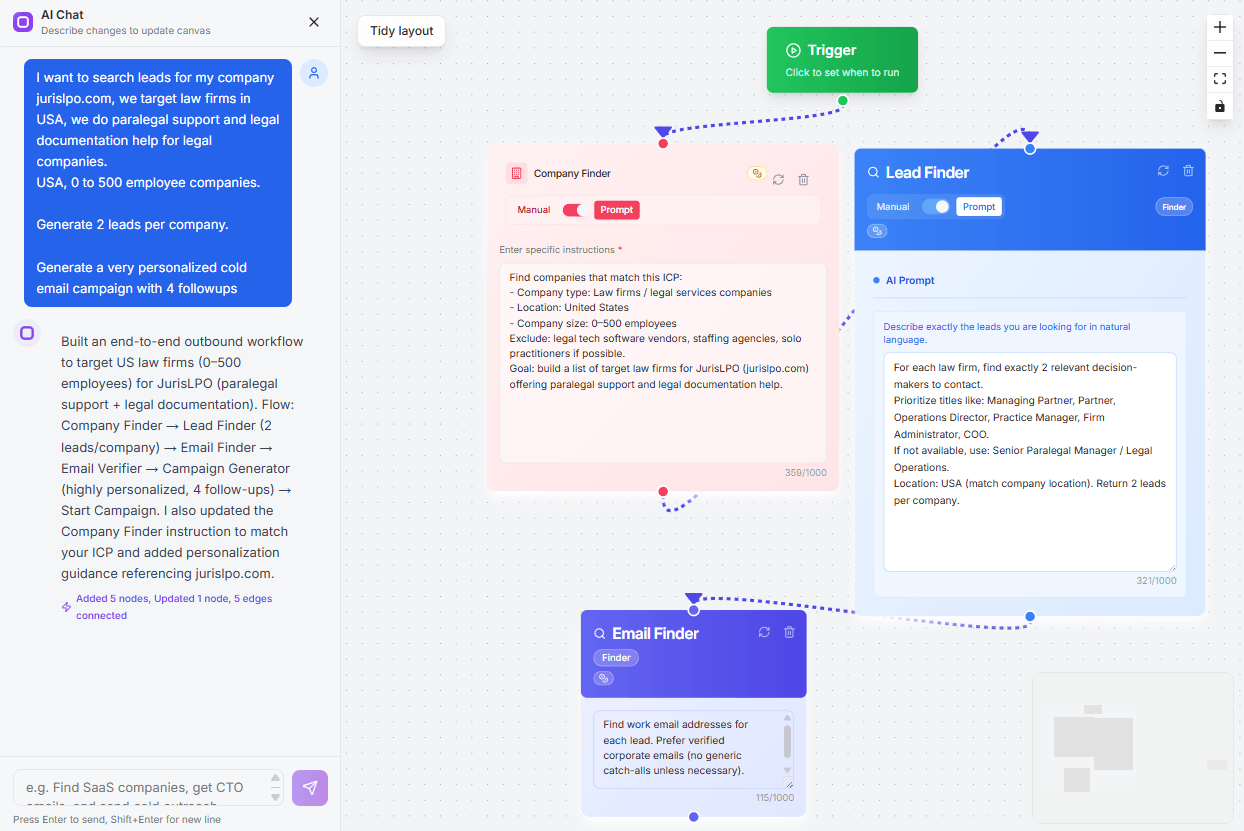
A unified workflow keeps everything connected:
This structure helps you stay organized while scaling outreach without breaking the flow.
Suggested Reading:
ABM Segmentation: How to Prioritize High-Value AccountsEven well-planned campaigns fail when small mistakes compound over time.
Most ABM email issues are not about strategy but execution, where messaging feels off, timing is wrong, or intent is unclear.
Long emails often try to explain too much, which ends up reducing clarity instead of improving it.
When your message takes effort to read, prospects simply skip it or delay responding.
In most cases, shorter emails perform better because they are easier to process quickly.
Keep your emails focused by:
The goal is not to impress but to get a response.
Adding personalization does not automatically make your email effective.
If the detail you include does not connect to a meaningful idea, it feels forced and sometimes even distracting.
Prospects can easily tell when personalization is just surface-level.
To avoid this:
Good personalization feels natural because it leads somewhere.
Jumping straight to a meeting request creates unnecessary resistance.
At the early stage, prospects are not ready to commit time without understanding the value first.
Instead of pushing for a call, focus on starting a conversation.
Build interest by:
When interest builds first, meetings happen more easily.
Account based marketing email examples work best when they stay simple, relevant, and aligned with real situations.
The more your emails reflect timing, intent, and clarity, the easier it becomes to start meaningful conversations with the right accounts.
Instead of trying to optimize every line, focus on using the right type of email at the right moment.
If execution feels difficult or inconsistent, that’s usually where campaigns break.
This is where tools like Oppora can help by turning your outreach into a structured, repeatable system.
You define who you want to reach, and the workflow handles the rest.
Start small, test what works, and build from there.
The main goal is to engage specific high-value accounts with highly relevant and personalized messages. Instead of mass emailing, ABM emails focus on building relationships with decision-makers, increasing response rates, and moving targeted prospects into meaningful conversations that can lead to long-term business opportunities.
ABM emails are highly targeted and based on research about specific companies, roles, and intent signals. Traditional cold emails are usually broader and less personalized. ABM emails focus on relevance and timing, while cold emails often rely on volume and generic messaging to generate leads.
Tools that support data enrichment, intent tracking, and automation help improve ABM results. Platforms that provide company insights, CRM integration, and personalization at scale allow teams to send more relevant emails, track engagement, and optimize outreach strategies based on real-time responses and behavior.
Typically, 2 to 4 follow-ups work best depending on engagement. Each follow-up should add new value or perspective instead of repeating the same message. Over-following without adding context can reduce response rates, while well-timed follow-ups help maintain visibility and encourage replies.
Effective personalization goes beyond using names or company details. It includes understanding business challenges, industry context, and timing signals like hiring or expansion. When personalization reflects real situations the prospect is facing, it builds trust and makes the email feel relevant and worth responding to.
Summarize with AI
Share