Home
Blog
Find 500 B2B Contacts for Free Every Month with Built-In Outreach.
Home
Blog
Manasa Goli
Published January 10, 2026
6 min
Try Oppora AI
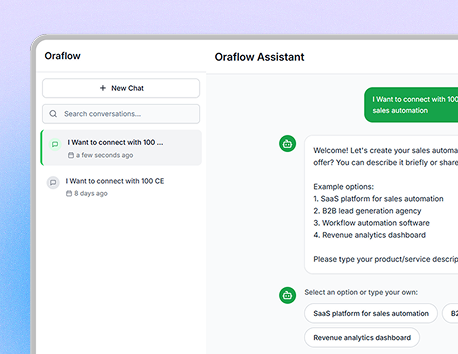
Create Self-Running Agentic Sales Workflows like N8N just by chatting with AI
Get Started for FREE
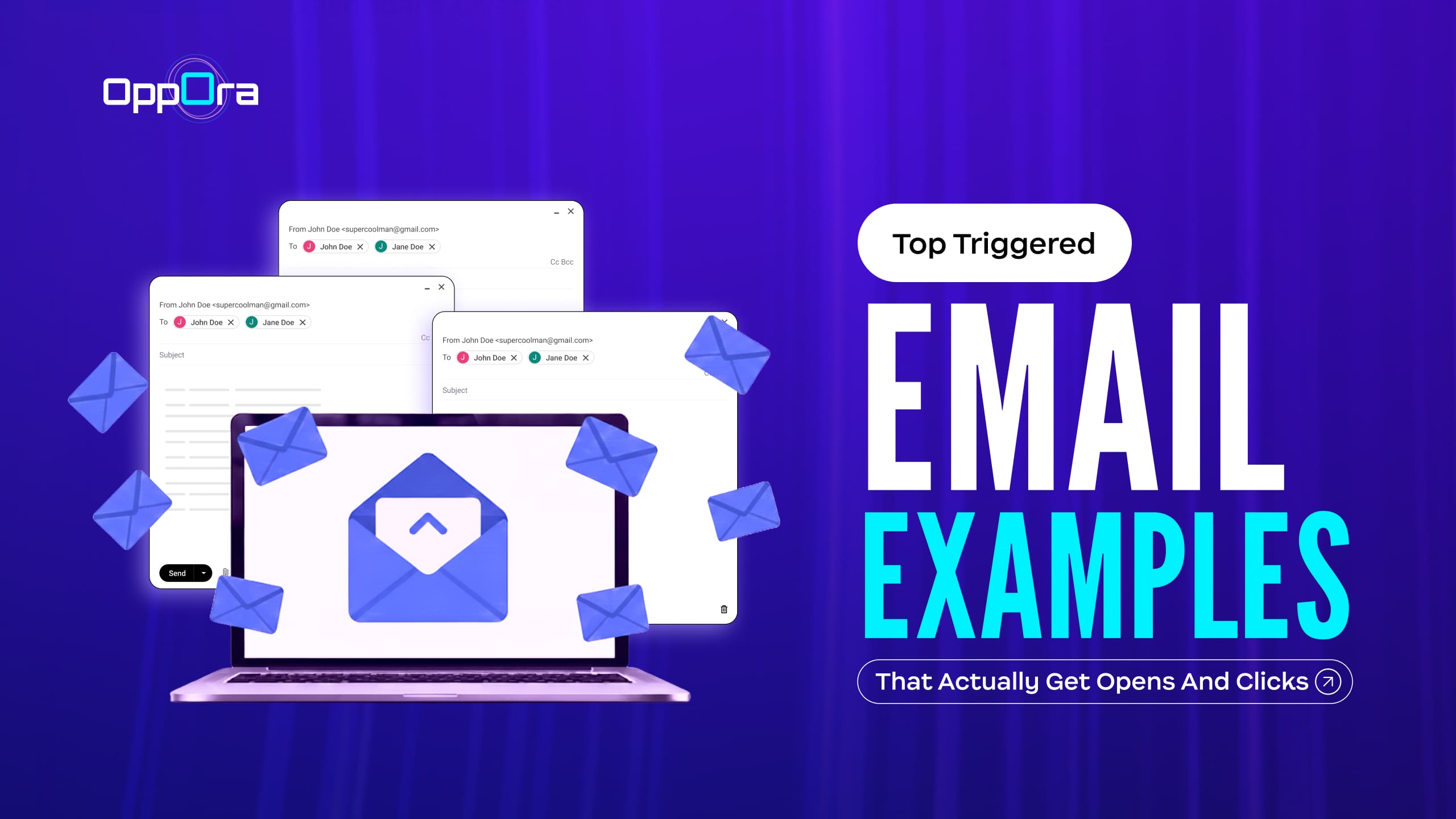
Triggered emails have one core advantage over traditional blasts — they’re timely, relevant, and context-driven. When done right, they can dramatically increase open rates, boost engagement, and convert passive subscribers into loyal customers.
But not all triggered emails are created equal.
In this guide, we’ll explore proven triggered email examples that actually get opens and clicks, tied with how Oppora.ai helps scale these workflows intelligently — especially for Sales, Marketing, and Growth teams.
Before diving into examples, let’s define what we’re talking about.
Triggered emails are automated messages sent based on user behavior, attributes, or specific events — think abandoned cart reminders, onboarding nudges, or re-engagement messages.
Unlike generic newsletters, triggered emails are:
✔ Personal ✔ Timely ✔ Highly relevant ✔ Likely to prompt action
According to industry benchmarks, triggered emails always outperform regular campaigns because they tap into real user intent.
Triggered emails succeed because they tap into intent.
When someone:
Triggered messaging meets that moment.
Real outcomes brands see:
This is especially powerful for teams managing volume and personalization — which is why many sales orgs automate triggers using platforms like Oppora to eliminate manual follow-ups and timing guesswork.
Read More: How To Generate Inbound Sales Leads
Triggered emails work throughout the customer journey:
Their power lies in contextual relevance. Sending the right message at the right moment builds trust and encourages action.
Let’s dive into the examples that consistently beat average benchmarks.
Trigger: New sign-up or account creation
The welcome email is often the strongest performed message in any triggered workflow, with significantly higher open rates than typical newsletters.
Why it Works
Best Practices
Example subject: “Welcome to [Brand] — Let’s Get You Started!”
This email should feel like the beginning of a conversation — not just a confirmation.
Trigger: User adds items to cart or browses products but doesn’t complete a purchase
Cart abandonment emails are among the highest converting triggered email types.
Why They Drive Engagement
Examples of Abandonment Triggers
Best Practices
Trigger: User sign-up but low engagement
Beyond the first welcome message, a triggered onboarding series helps accelerate product adoption and reduce churn — especially for SaaS or complex products.
What to Include
Key Objective: Help users reach first value as quickly as possible.
Trigger: Completed transactions or account actions
These are expected and often have extremely high open rates because they contain valuable information.
Common Examples
Best Practices
When structured thoughtfully, these messages double as both functional alerts and opportunities to extend engagement.
Trigger: Inactivity or dropped engagement
Not all subscribers stay active — but before writing them off, a well-timed re-engagement message can rekindle interest.
Typical Trigger Conditions
Effective Tactics
Trigger: Anniversaries, birthdays, achievements
These emails are more emotional and engagement-focused, helping strengthen customer loyalty.
Examples
They’re not just transactional — they deepen relationships.
Trigger: Purchase or browsing behavior
Triggered recommendations are most effective when they use behavioral signals to suggest relevant options, such as complementary products or upgrades.
Why It Works
Examples
Examples tell you what to send. Types tell you how the system should be structured.
These eight categories create a complete automation ecosystem:
Understanding these makes automation scalable — whether you're running a small campaign or a multi-touch, multi-product engagement engine.
Triggered emails for existing customers are automated messages sent based on how users behave inside your product or store. The goal is to deliver the right message at exactly the right moment to guide customers forward in their journey.
Decide which actions should trigger an email, such as:
Send different messages to different groups based on:
Keep triggered emails short and purposeful:
Ensure messages are:
Monitor:
Use insights to refine triggers and add new ones over time.
Outbound-triggered outreach works differently than customer-based triggers — you’re not waiting for users to interact with your website.
Instead, you act when external buying signals show a prospect may be ready.
This is where Oppora helps teams scale, by automating prospect discovery, enrichment, and email sequences — so your outbound triggers fire the moment opportunities appear.
Decide what action should start the email workflow. Outbound triggers can include:
Once a trigger is defined, your automation system can capture relevant contacts and start the workflow automatically, eliminating manual list creation.
Segmentation ensures emails go only to high-quality prospects. Consider:
Triggered emails work best when contextual and personalized:
Timing is critical for outbound triggers:
Track key metrics to improve performance:
Once triggers, segments, content, and timing are set, your outbound sequences run automatically, delivering messages at the right time to the right prospects. Automation ensures consistent outreach while letting your sales team focus on closing opportunities rather than sending emails manually.
While the steps above cover triggered emails for existing customers, outbound prospecting requires a different approach — this is where tools like Oppora AI can help.
Triggered email examples perform better with a strategic foundation. Here’s how to make them work harder for you:
Deliver within minutes of the trigger — relevance fades quickly.
Mention names, dynamic product content, or behavior cues — personalization drives engagement but keep it natural.
Every triggered email should guide the user toward one key action — whether it’s completing a purchase, finishing onboarding, or viewing a new feature.
A major share of openings happens on phones, so make sure buttons are tappable and layouts are responsive.
Measure subject lines, timing, CTAs, and creative — iterative improvements boost performance over time.
Triggered emails are one of the most effective automated messages in a marketer’s toolkit. When aligned with real user behavior and business objectives, they:
From welcome sequences to re-engagement campaigns, each type of triggered email has a specific role in guiding users through their journey. The key is strategic alignment and data-informed execution — not just automation.
Summarize with AI
Share