Home
Blog
Oppora’s Claude MCP is Live. Connect our Email Database & Outreach features with any tool to build smart automations inside Claude.
Home
Blog
Martin Smith
Published September 25, 2025
26 min

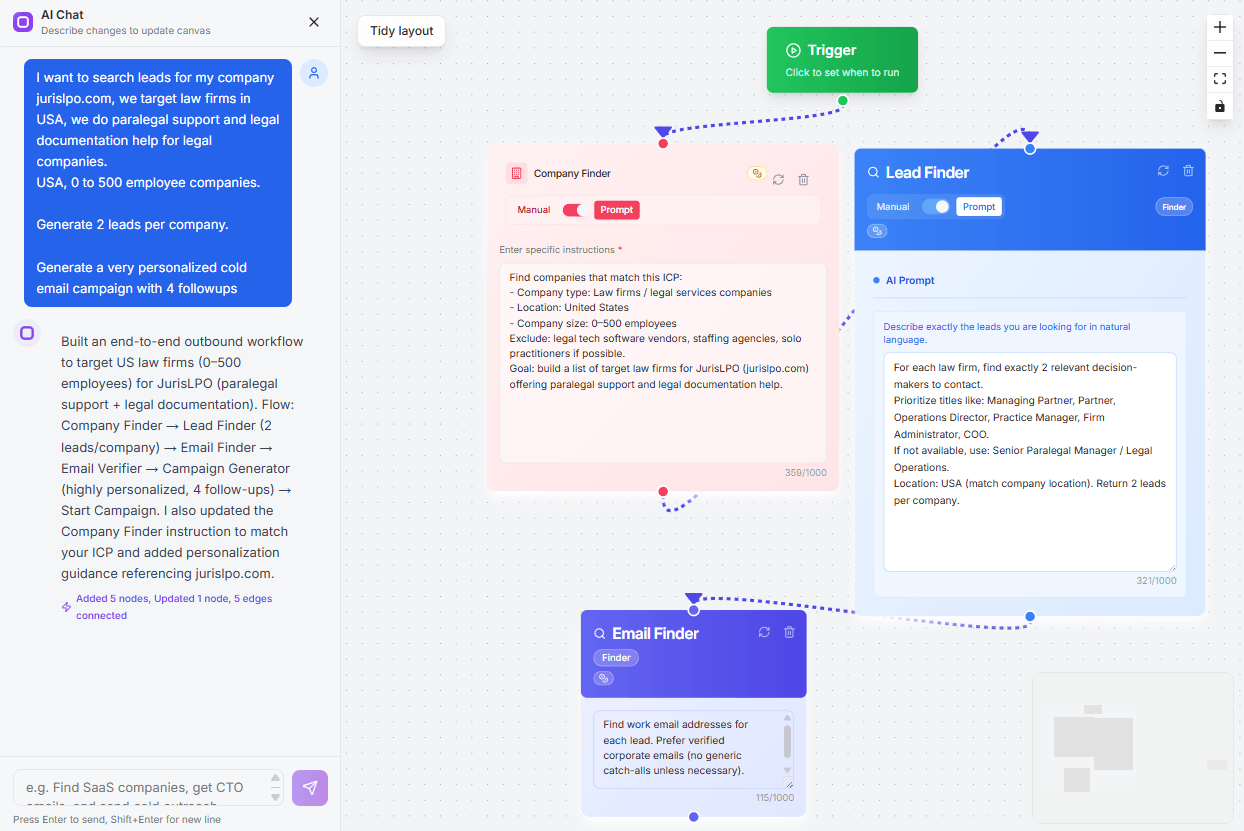
Try Oppora AI
Create Self-Running Agentic Sales Workflows like N8N just by chatting with AI
Get Started for FREE
Your sales team may have thousands of leads but still struggle to know which ones deserve attention first.
Manual scoring often relies on fixed rules, incomplete data, and guesswork. As a result, high-intent prospects can easily get overlooked.
AI lead scoring solves this by analyzing engagement, firmographic data, behavior, and buying signals.
It helps you rank leads based on their likelihood to convert, so your team can focus on the strongest opportunities.
In this guide, you will learn:
AI lead scoring uses artificial intelligence to evaluate leads and predict which ones are most likely to convert.
It studies patterns across customer data, engagement, company details, and past sales activity.
This helps your team focus on stronger opportunities instead of treating every lead the same.
AI lead scoring tools collect data from your CRM, website, email campaigns, and enrichment sources.
The system then identifies patterns linked to past conversions.
A lead may receive a higher score based on factors such as job title, company size, email replies, website visits, or recent buying intent.
Scores can also change as new activity happens.
Someone who visits your pricing page or responds to outreach may quickly move higher on your priority list.
Traditional scoring is easier to set up, but AI scoring is more responsive and data-driven.
Most AI lead scoring tools use:
When these signals are combined, you get a clearer view of which leads deserve immediate attention.
Choosing the right platform requires more than checking which tool has the longest feature list.
We evaluated each option based on how well it helps you identify stronger leads, improve data quality, automate sales actions, and manage costs.
We assessed whether each platform could:
Tools with clearer scoring logic and more relevant signals ranked higher.
A lead score is only useful when the data behind it is reliable.
We looked for platforms that provide:
Better enrichment gives you a more complete view of every prospect.
We reviewed whether each tool could turn scores into practical sales actions.
Important capabilities included:
We considered how quickly your team could start using the platform.
This included:
Tools with faster setup and simpler controls received stronger ratings.
Finally, we compared:
The strongest tools offer a practical balance of scoring accuracy, automation, reliable data, and long-term value.
Each platform approaches lead scoring differently.
Some focus on predictive CRM scoring, while others combine enrichment, intent data, and automated sales workflows. Use the table below to match each tool with your sales process.
Oppora.ai suits teams that want scoring to trigger enrichment, outreach, replies, and CRM updates automatically.
Platforms such as 6sense and Demandbase are better suited to enterprise account-based marketing, while HubSpot and Salesforce Einstein fit teams that want scoring inside their existing CRM.
The right platform should not only rank leads. It should explain why a prospect matters and trigger the next sales action.
These tools cover agentic outbound, CRM scoring, enterprise intent data, and custom AI workflows.

Oppora.ai combines lead scoring, enrichment, contact verification, outreach, reply handling, and CRM updates in one platform.
Instead of only assigning scores, it can move qualified leads into automated email and LinkedIn workflows.
Best for: Founders, agencies, SDR teams, and B2B businesses that want to score leads and act on them without switching between multiple tools.

Here are Oppora.ai’s pricing plans:
All listed plans include unlimited campaigns, emails, and follow-ups.

Here is how users rate Oppora.ai on a third-party review platform:
Reviewers highlight its ability to bring lead generation, enrichment, outreach, follow-ups, and meeting booking into one automated workflow.
Overall verdict: Oppora.ai is a strong option when you want AI lead scoring to do more than rank prospects. Its 1B+ contact database, enrichment tools, intent signals, and AI workflows help you find, score, verify, contact, and qualify leads from one platform.

HubSpot combines lead scoring with CRM data, marketing automation, reporting, email campaigns, and sales workflows.
Because your scores sit directly inside contact and company records, marketing and sales teams can view the same qualification data without moving leads between separate platforms.
Best for: Growing marketing and sales teams that already use HubSpot or want lead scoring inside a connected CRM.
AI-assisted scoring recommendations are available with Marketing Hub Enterprise, while custom lead scoring is available in eligible premium plans.

Here are HubSpot Marketing Hub’s current starting prices:

Here is how users currently rate HubSpot on G2:
The large review volume reflects HubSpot’s established position across CRM, marketing, sales, and customer-service software.
Overall verdict: HubSpot is a strong choice when you want AI lead scoring connected directly to CRM records, marketing campaigns, sales routing, and reporting.
However, you will need Marketing Hub Enterprise to access its AI scoring recommendations, making it less suitable when you only need an affordable standalone lead scoring tool.

Clay helps you build custom lead-scoring models using enrichment data, buying signals, AI research, and your own qualification criteria.
Rather than providing one fixed predictive score, Clay lets you decide which fit and intent signals matter to your sales process.
Best for: RevOps, growth, and outbound teams that want flexible lead scoring supported by multiple data providers.
Clay supports rule-based formulas and AI-assisted scoring. This allows you to use predictable rules for standard leads and AI for less structured cases.
These features allow you to research, enrich, score, and route leads from the same table-based workspace.

Here are Clay’s current pricing plans:
Clay also provides a 14-day trial for its paid plans.

Here is how users currently rate Clay on G2:
Users commonly praise Clay’s enrichment capabilities, integrations, visual workflows, and ability to combine AI research with outbound automation.
Some reviewers note that enriched results can occasionally miss the mark, making manual checks important before launching outreach.
Overall verdict: Clay is a strong AI lead scoring tool when you want complete control over the data, formulas, and signals used to qualify prospects.
It is especially useful for experienced GTM teams, although smaller teams may find the setup and usage-based pricing more complex than a ready-to-use scoring platform.

6sense is an enterprise revenue intelligence platform that helps you identify in-market accounts, understand buying-group activity, and prioritize prospects using predictive analytics.
It focuses more on account-level readiness than basic contact scoring, making it useful for complex B2B sales cycles with several decision-makers.
Best for: Enterprise B2B teams running account-based marketing programs with long sales cycles and large target-account lists.
Its predictive buying stages use scores from 0 to 100 and estimate which accounts may open or progress an opportunity within the next 90 days.
G2 reviewers frequently praise its intent data and targeting capabilities, while learning difficulty and platform complexity are common concerns.

6sense does not publish fixed prices for its predictive lead scoring and Revenue Marketing platform.
Its Sales Intelligence options include:
You need to contact 6sense for a quote based on the products, data credits, users, and predictive capabilities your team requires.

Here is how users currently rate 6sense Revenue Marketing on G2:
Users frequently highlight buyer-intent visibility, account prioritization, and sales and marketing alignment. However, several reviews mention a demanding setup process, pricing concerns, and a steep learning curve.
Overall verdict: 6sense is a strong choice when you need predictive account scoring supported by deep intent data and buying-group insights.
It is better suited to mature enterprise ABM teams than smaller businesses looking for an affordable, ready-to-use lead scoring tool.

ZoomInfo combines B2B contact data, company intelligence, buying signals, enrichment, and AI-assisted account prioritization.
Its GTM Workspace brings CRM records, engagement history, ZoomInfo intelligence, and intent signals into one view. This helps your team identify stronger accounts and decide what action to take next.
Best for: Established B2B sales and marketing teams that need extensive contact data alongside AI-powered account prioritization.
ZoomInfo focuses heavily on account prioritization rather than providing only a simple contact score.
This makes it useful when several people influence a B2B purchase and your team needs to evaluate the entire account.

Here are ZoomInfo’s available pricing options:
ZoomInfo offers a free trial, but you need to contact its sales team for exact paid pricing.

Here is how users currently rate GTM Workspace powered by ZoomInfo on G2:
Users commonly praise its contact database, lead-generation capabilities, account insights, and intent data.
Common concerns include premium pricing, occasional outdated contact information, contract complexity, and customer-support experiences.
Overall verdict: ZoomInfo is a strong choice when data depth is central to your lead scoring process.
It helps you combine account fit, contact information, intent signals, and engagement history to prioritize opportunities. However, its custom pricing and platform complexity make it more suitable for established revenue teams than small businesses seeking a simple scoring tool.

Salesforce Einstein uses machine learning to score leads and opportunities using conversion history already stored in Salesforce.
Because the scores appear inside your CRM records, sales representatives can prioritize prospects without moving data into another platform.
Best for: Mid-market and enterprise teams that already use Salesforce and want predictive scoring connected to their CRM workflows.
Einstein refreshes lead-scoring models every ten days and updates individual scores at least every six hours when needed.
When your data does not meet Salesforce’s requirements, Einstein may use a global model instead of one trained entirely on your organization’s history.

Here are Salesforce’s current Sales Cloud starting prices:
Salesforce lists lead scoring as an additional purchasable capability. Exact Einstein Lead Scoring costs depend on your Sales Cloud edition and selected AI package.
Einstein Relationship Insights has separate pricing:

Here is how users rate the Salesforce sales platform that includes its Einstein and Agentforce capabilities:
Users frequently praise Salesforce for its customization, centralized CRM data, reporting, integrations, and sales automation.
Common concerns include pricing, setup complexity, the learning curve, and the need for mature data before advanced AI features deliver their full value.
Overall verdict: Salesforce Einstein is a strong choice when Salesforce already acts as your central CRM.
It gives you predictive lead and opportunity scores without exporting customer data. However, its licensing, implementation requirements, and administration needs make it better suited to established teams than startups seeking a simple standalone AI lead scoring tool.

Warmly identifies anonymous website visitors, enriches them with contact and company data, and prioritizes them using real-time intent signals.
Rather than relying mainly on historical CRM conversions, it helps you qualify prospects based on what they are doing on your website right now.
Best for: B2B sales and marketing teams that want to identify, score, route, and engage high-intent website visitors before they leave.
Warmly is better described as an intent-based lead prioritization platform than a traditional predictive scoring tool.
It helps you act on live buyer behavior rather than waiting for enough historical data to train a conversion model.
G2 reviewers frequently praise its real-time visitor insights, setup process, and integrations. Some reviewers report that identification accuracy can vary, especially with anonymous traffic.

Here are Warmly’s current annual pricing plans:
Warmly also offers quarterly billing, while annual billing provides a lower effective price.

Here is how users currently rate Warmly on G2:
Users commonly value its website visitor visibility, real-time alerts, HubSpot and Slack integrations, and ability to automate timely outreach.
Common concerns include inconsistent visitor identification and the high entry price of its paid plans.
Overall verdict: Warmly is a strong option when website behavior is one of your most valuable lead-scoring signals.
It helps you identify and prioritize active buyers, then engage them through chat, email, routing, and retargeting. However, teams seeking database-wide predictive scoring may need to combine it with a CRM scoring or sales intelligence platform.

Relevance AI is a low-code platform for building AI agents that research, qualify, score, route, and follow up with leads.
It does not give you one fixed predictive scoring model. Instead, you can create an agent that evaluates prospects using your own ICP, qualification rules, data sources, and sales process.
Best for: Sales operations, RevOps, and technical GTM teams that want to build a customized AI lead qualification and scoring system.
Its inbound qualification agent can review demo requests, enrich prospect records, filter low-fit leads, assign qualified prospects, and schedule meetings automatically.
Relevance AI works best when your team has a clear definition of a qualified lead. Without strong criteria, the agent may produce inconsistent or overly broad qualification decisions.

Here are Relevance AI’s current pricing plans:
Paid plans also let you purchase additional actions and vendor credits without upgrading the full subscription.

Here is how users currently rate Relevance AI on G2:
Users commonly praise its no-code agent builder, straightforward onboarding, integrations, and ability to manage several agents from one workspace.
Some reviewers want stronger administrative controls and more simplicity when managing complex workflows.
Overall verdict: Relevance AI is a strong option when you want to build a lead-scoring agent around your exact ICP and qualification process.
It gives you more flexibility than a fixed scoring platform. However, you must invest time in defining criteria, testing decisions, and monitoring agent performance before using scores to automate sales actions.
The best AI lead scoring tool is not always the platform with the most features.
You need one that matches your sales process, data quality, team size, and outreach goals.
Start by deciding what you want the scoring system to improve.
Your goal may be to:
Once your goal is clear, you can avoid paying for features your team will not use.
A score is only useful when it leads to action.
Check whether the platform can:
Tools that connect scoring with execution help you reduce manual work and respond faster.
AI scoring depends on the information behind each lead.
Look for accurate firmographic, demographic, technographic, and behavioral data.
You should also check whether the platform offers:
Poor data can make even an advanced AI model unreliable.
Your scoring tool should fit into your existing sales stack.
Confirm that it integrates with your CRM, marketing automation software, email platform, and sales engagement tools.
Also check whether scores, notes, and activity sync in both directions.
This prevents your team from working with incomplete or outdated records.
Do not compare tools using the starting price alone.
Review:
Choose a platform that works for your current volume but can also support your team as campaigns, data needs, and lead volumes increase.
AI lead scoring becomes valuable when your team has more prospects than it can review manually.
You can use it across inbound sales, outbound prospecting, product-led growth, and account-based marketing.
When several people submit forms or request demos, AI can rank them using company fit, job seniority, website activity, and previous engagement.
You can then send high-scoring leads directly to sales while placing lower-intent contacts into nurturing campaigns.
SaaS companies can combine product activity with firmographic data to identify users most likely to upgrade.
Useful signals may include:
MadKudu lists product-qualified lead and account scoring as a core use case, alongside automated outreach and account insights.
AI scoring can evaluate complete accounts instead of isolated contacts.
You can combine ICP fit, keyword intent, website visits, product activity, and engagement from several members of the buying group.
One global analytics platform combined 6sense keyword intent, web activity, and internal product engagement to build a propensity model. According to the case study, high-scoring accounts achieved higher close rates and shorter sales cycles.
A lead score should help you decide what happens next.
Based on a scoring threshold, your system can:
This reduces the delay between showing interest and receiving a relevant response.
You can also score existing customers using product adoption, engagement, company growth, renewal timing, and new buying signals.
This helps your team identify accounts that may be ready for an upgrade, cross-sell, or additional user seats. Expansion scoring and automated sales plays are recognized use cases for predictive scoring platforms.
Grammarly previously sent around 400 manually selected marketing-qualified leads to sales each month, but many were not ready to convert.
After introducing Salesforce AI-based scoring, it reduced that volume to roughly 200 higher-quality leads per month. Salesforce reports that Grammarly increased MQL conversion by 30%, raised plan upgrades by 80%, and reduced closing time from 60–90 days to 30 days.
AI lead scoring helps you move beyond guesswork and focus on prospects with the strongest fit, intent, and likelihood to convert.
The right tool should do more than assign a number. It should give you reliable data, explain why a lead matters, and help your team take the next action quickly.
For some teams, that may mean predictive scoring inside a CRM. For others, it may mean account-level intent, product-usage scoring, or custom qualification workflows.
Your best choice depends on your sales process, data quality, budget, and how much automation you need.
You should also test any platform using your own lead data before making a long-term decision.
If you want lead scoring to connect directly with enrichment, outreach, follow-ups, and CRM updates, Oppora.ai is worth exploring. Its AI agents can help you turn qualified leads into active sales conversations without adding more manual steps.
An AI lead scoring tool analyzes lead data, engagement, company details, and buying behavior to estimate how likely each prospect is to convert. It then assigns a score or priority level so your team can focus on the strongest opportunities first.
Predictive lead scoring is one type of AI lead scoring that mainly uses historical conversion data to forecast future outcomes. Broader AI lead scoring can also include real-time intent, website activity, enrichment data, engagement signals, and automated prospect research.
Yes, most AI lead scoring platforms connect with CRMs such as HubSpot, Salesforce, and Pipedrive. These integrations can update contact records, route qualified leads, trigger workflows, notify sales representatives, and keep pipeline stages current.
The best option depends on your budget, sales process, and automation needs. HubSpot suits CRM-first teams, Clay supports custom enrichment workflows, while Oppora.ai fits startups that want scoring, verification, outreach, follow-ups, and CRM updates in one platform.
AI lead scoring tools are worth considering when your team manages more leads than it can review manually. They can reduce wasted outreach, improve response times, and help sales representatives focus on better-fit prospects, but results still depend on clean data and clear qualification criteria.
Summarize with AI
Share