Home
Blog
Oppora’s Claude MCP is Live. Connect our Email Database & Outreach features with any tool to build smart automations inside Claude.
Home
Blog
Adam Hossain
Published May 26, 2026
17 min

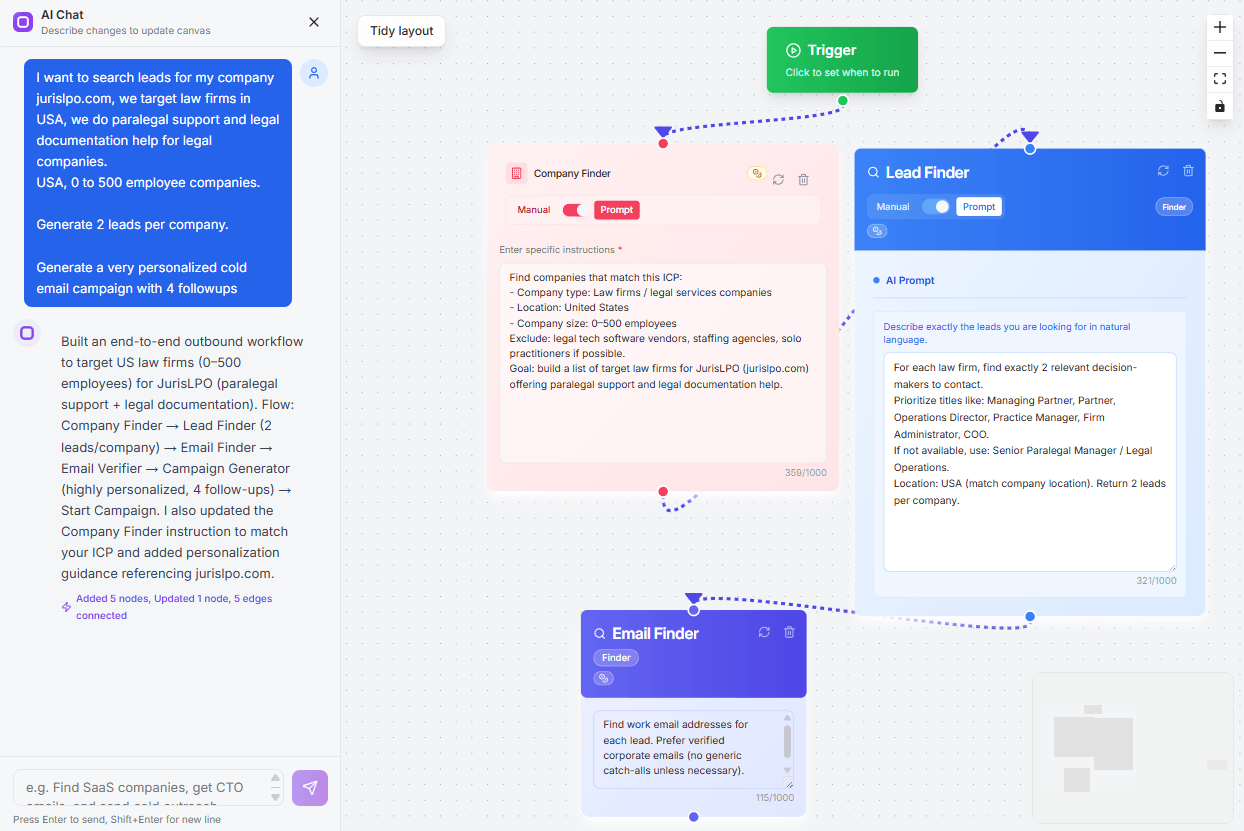
Try Oppora AI
Create Self-Running Agentic Sales Workflows like N8N just by chatting with AI
Get Started for FREE
Hunter.io gets the job done — until it doesn't.
As your outbound volume grows, you start hitting walls. Credits run out faster than expected. International data feels patchy. And basic email lookup just isn't enough when your competitors are running fully automated, multichannel outreach.
That's when teams start looking for Hunter.io alternatives that can actually keep up.
In this guide, you'll find:
Most teams don't switch away from Hunter.io out of nowhere. Something specific triggers it — a budget conversation, a failed campaign, or a workflow that stopped scaling.
Here's what that usually looks like.
Hunter.io's credit model works fine when you're prospecting occasionally. But the moment outbound volume picks up, the math stops working in your favor.
Many users running high-volume campaigns find alternatives at nearly half the cost for similar output.
In discussions where sales teams compare Hunter.io pricing alternatives on Reddit, users frequently point out that competing tools are almost two times cheaper for the same output.
When credits cap how many contacts you can reach monthly, scaling becomes a pricing problem — not a strategy one.
If your targets go beyond North America or Western Europe, Hunter.io's coverage starts feeling inconsistent.
Teams prospecting across Asia or emerging markets often report gaps in data accuracy and contact availability.
In user conversations about Hunter.io international data gaps shared on Reddit, growth marketers specifically call out poor optimization for non-Western names and regions.
That's a small comment pointing to a much bigger gap for international outbound teams.
Suggested Reading:
10 Best B2B Database Tools for High-Volume Lead GenerationEmail discovery used to be the hard part. Now it's just the starting point.
Today's outbound workflows depend on:
In real comparisons between Hunter.io and full-stack outbound platforms discussed on Reddit, sales leaders consistently highlight that Hunter.io handles step one well — but modern teams need everything after it too.
This is what ties everything together.
Paying separately for prospecting, verification, sequencing, and follow-up automation adds up fast in cost and in complexity.
In community threads where outbound teams evaluate Hunter.io workflow alternatives on Reddit, the recurring theme is simple: teams want more output from one connected platform instead of managing five disconnected tools.
The shift isn't just about price. It's about getting more from every dollar in your outbound stack.
Switching tools is only worth it if the new platform actually solves what Hunter.io couldn't.
Before comparing options, it helps to know exactly what capabilities move the needle for outbound teams.
Everything starts here. If the emails you're sending to aren't valid, no amount of personalization or automation saves your campaign.
Strong verification systems validate contacts before outreach begins catching invalid addresses, reducing bounce rates, and protecting your sender reputation over time.
A high bounce rate doesn't just waste effort. It signals mailbox providers that something's off, and inbox placement suffers for it.
Suggested Reading:
Catch-All Email Verification: What is it & How It WorksOnce deliverability is covered, targeting becomes the next lever. Basic name-and-email lookup isn't enough when you're trying to reach the right person at the right company at the right time.
Look for platforms that let you filter by:
Better filters mean smaller, sharper lead lists — and sharper lists convert better than large, generic ones.
Suggested Reading:
Company Data Enrich by Oppora.ai - Smarter B2B Targeting with Accurate Company InsightsFinding verified contacts manually and then managing outreach separately creates friction at every step.
The best Hunter.io alternatives close that gap by connecting lead discovery directly to campaign execution.
Sequence management, automated follow-ups, and two-way CRM sync keep your pipeline moving without constant manual input.
When a prospect replies, your CRM should already know about it.
Volume without relevance rarely works anymore.
AI-assisted email writing, dynamic personalization, and LinkedIn integration help outbound teams scale outreach while keeping messaging sharp.
Multichannel matters here because most prospects don't respond to a single touchpoint.
Combining email sequences with LinkedIn touchpoints increases response rates without increasing manual workload.
Not every tool on this list solves the same problem.
Some are built for lightweight email discovery, others for enterprise-scale intelligence, and a few handle the entire outbound workflow from prospecting to booked meetings.
To make this useful, each platform below is broken down by what it actually does well so you can match the tool to how your team operates, not just how it's marketed.
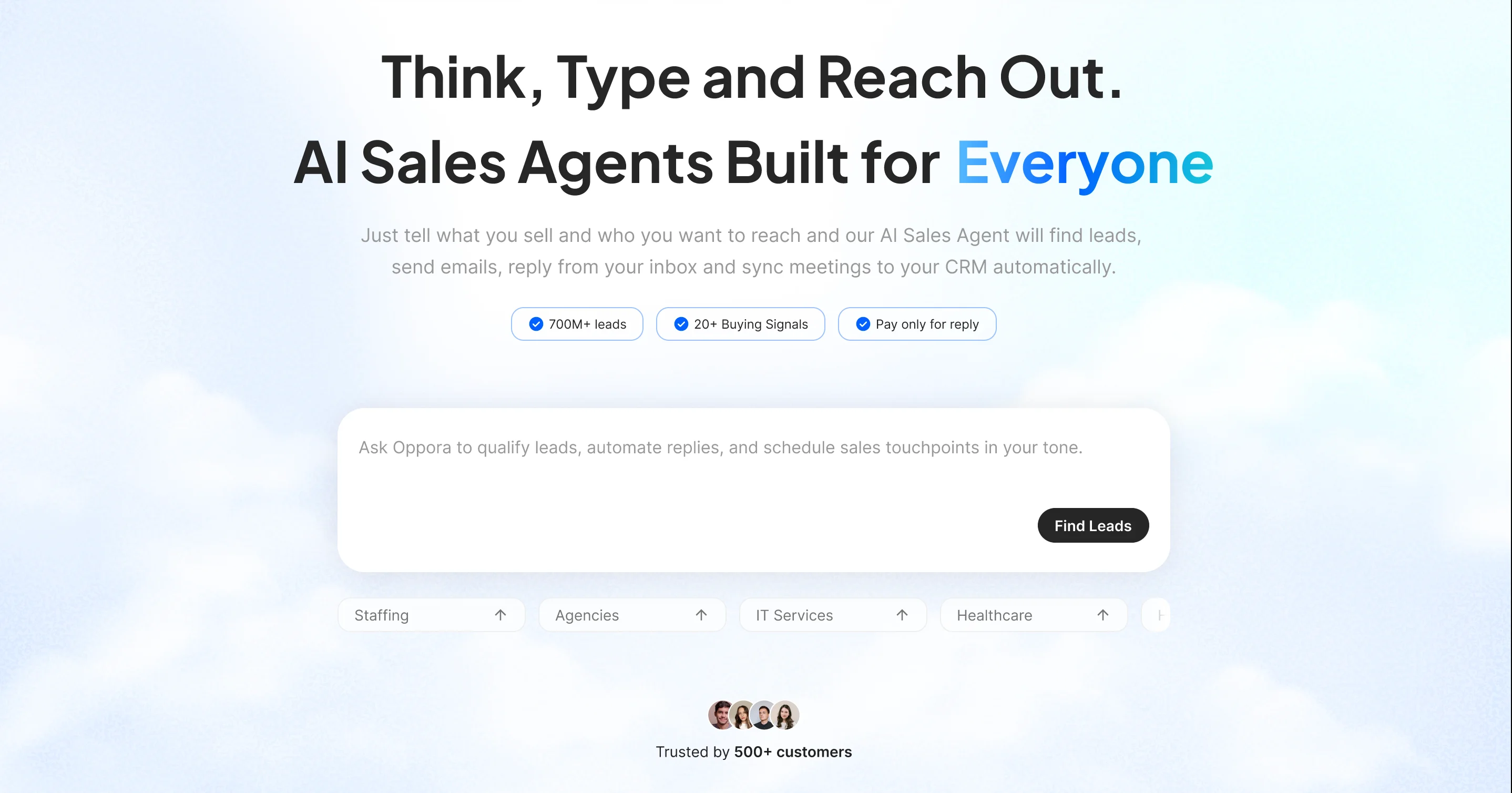
If you're looking for a Hunter.io alternative that goes beyond email finding, Oppora.ai is built for the entire outbound workflow — not just one part of it.
Instead of stitching together separate tools for prospecting, verification, and outreach, Oppora runs everything inside one connected system.
You find leads, enrich contacts, launch personalized campaigns, and handle replies without ever switching platforms.
Oppora's eight AI sales agents handle the full cycle — from identifying high-intent prospects using buying signals to writing personalized outreach, managing follow-ups, and syncing replies directly to your CRM.
Teams go from zero to live campaigns without building a separate outbound stack.
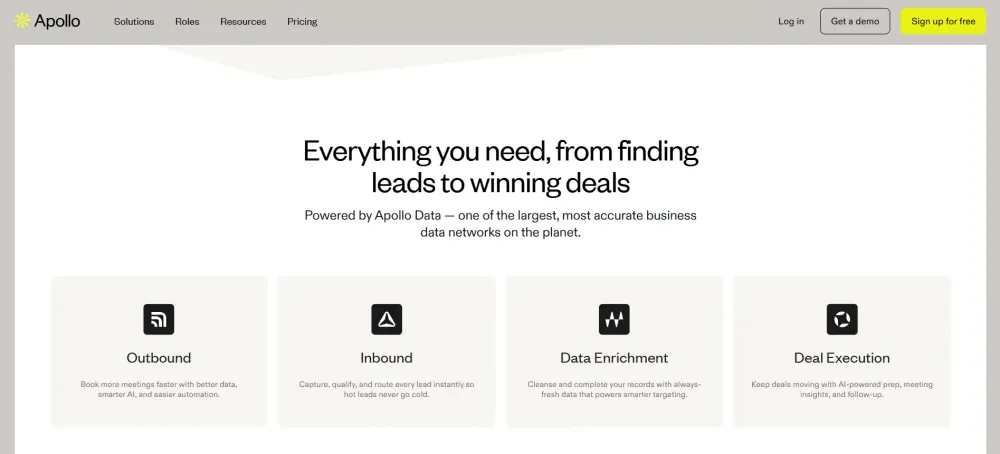
Apollo.io is one of the most recognized names in outbound sales.
It combines a large B2B contact database with built-in sequencing, enrichment, and CRM integrations — giving teams a single platform to manage prospecting and engagement together.
For SMBs and growing sales teams, that combination is genuinely useful.
You can build lead lists, filter by job title, industry, or intent signals, and move contacts directly into outreach sequences without switching tools.
Apollo works well for teams that want one dashboard covering both lead discovery and outbound engagement.
SDRs can prospect, enrich, and launch sequences from the same interface — reducing the back-and-forth between disconnected tools.
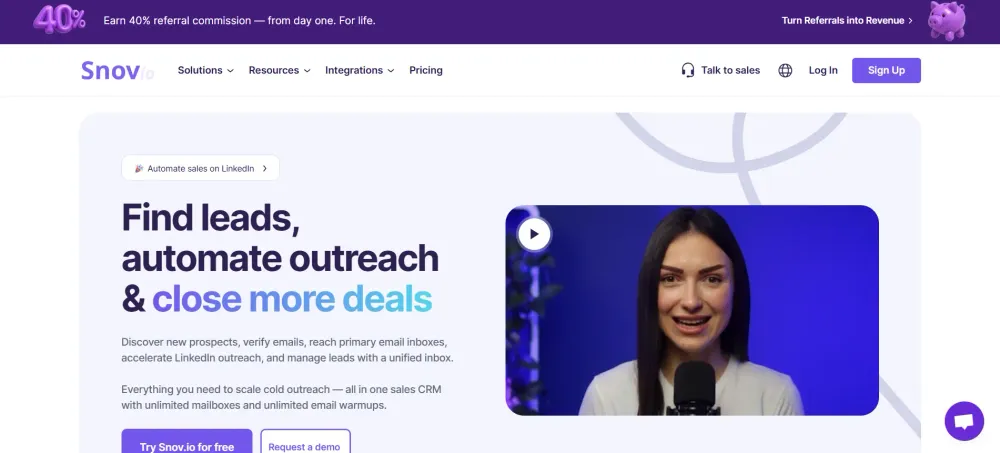
Snov.io is built with simplicity in mind, making it a natural fit for startups and smaller teams that want outbound automation without the complexity of an enterprise stack.
It covers the core workflow reasonably well — find emails, verify them, and push contacts into drip sequences.
For teams just getting their outbound motion off the ground, that's often enough to start generating pipeline without a steep learning curve.
Snov.io helps smaller sales teams move from contact discovery to active outreach without building a complex tool stack.
You can collect leads, verify emails, and launch automated sequences all from one relatively straightforward interface — keeping operations lean while still running consistent outbound campaigns.
Suggested Reading:
12 Snov.io Alternatives Ranked by Features and Pricing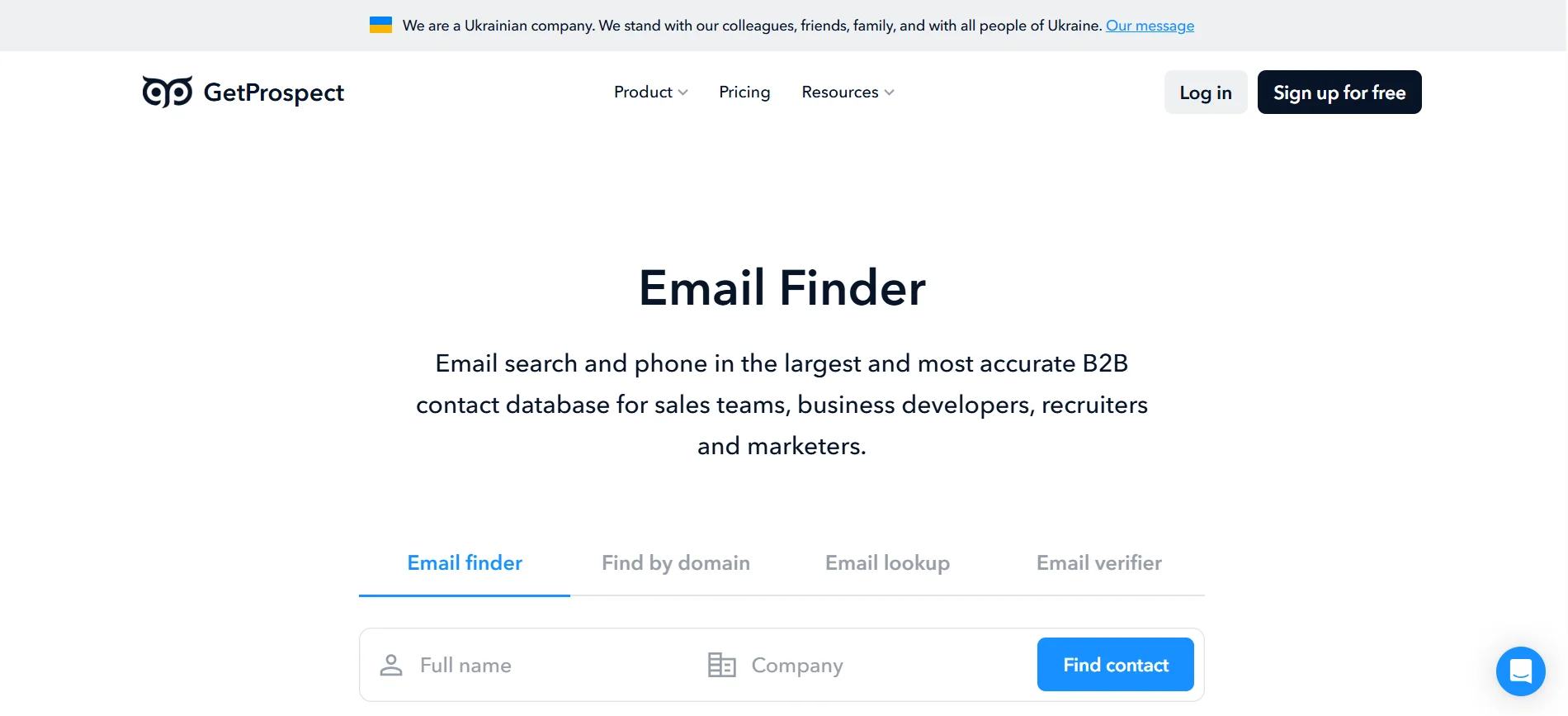
If your prospecting workflow lives primarily on LinkedIn, GetProspect is designed exactly for that.
It focuses on helping SDRs and recruiters pull verified business emails directly from LinkedIn profiles — keeping the contact collection process fast and straightforward.
It doesn't try to be a full outbound platform. Instead, it does one thing well — LinkedIn-based email discovery — and makes that process simple enough that even non-technical users can build prospect lists quickly.
GetProspect works best for teams running manual LinkedIn prospecting workflows.
While browsing profiles, you can collect verified contact information in a few clicks and export those lists directly into your outreach tool or CRM — cutting down the time between identifying a prospect and actually reaching out to them.
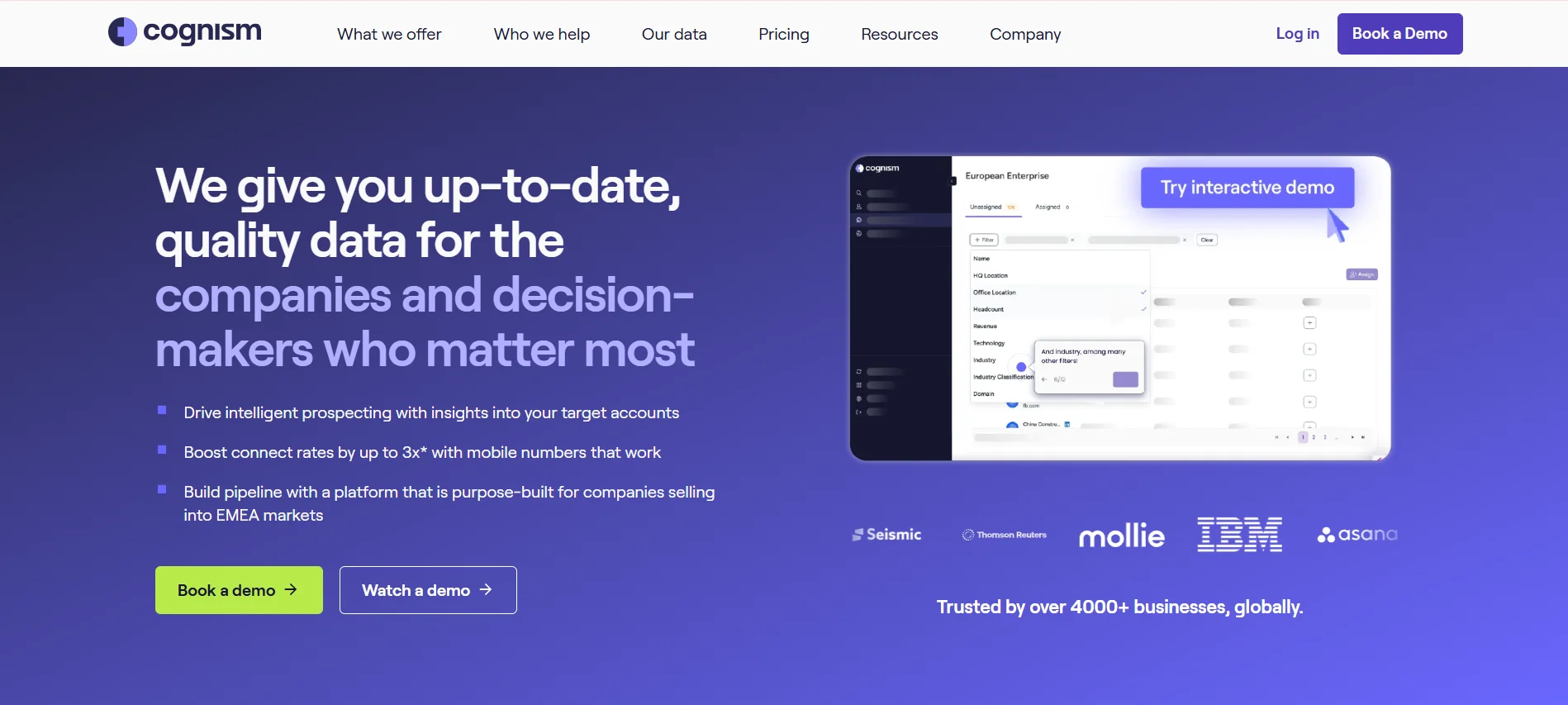
Cognism plays in a different league compared to most tools on this list.
It's built for enterprise outbound teams that need global data coverage, compliance-ready prospecting, and deeper sales intelligence — not just email lookup.
Where it stands out is phone number enrichment and international data accuracy.
If your team is running high-volume outbound across multiple regions and needs verified mobile numbers alongside emails, Cognism is one of the few platforms that handles that reliably.
Cognism helps enterprise sales teams prospect across international markets without compromising on data quality or compliance standards.
Organizations running territory-based outbound campaigns use it to enrich accounts, identify decision-makers across regions, and connect richer company intelligence directly into their existing sales workflows.
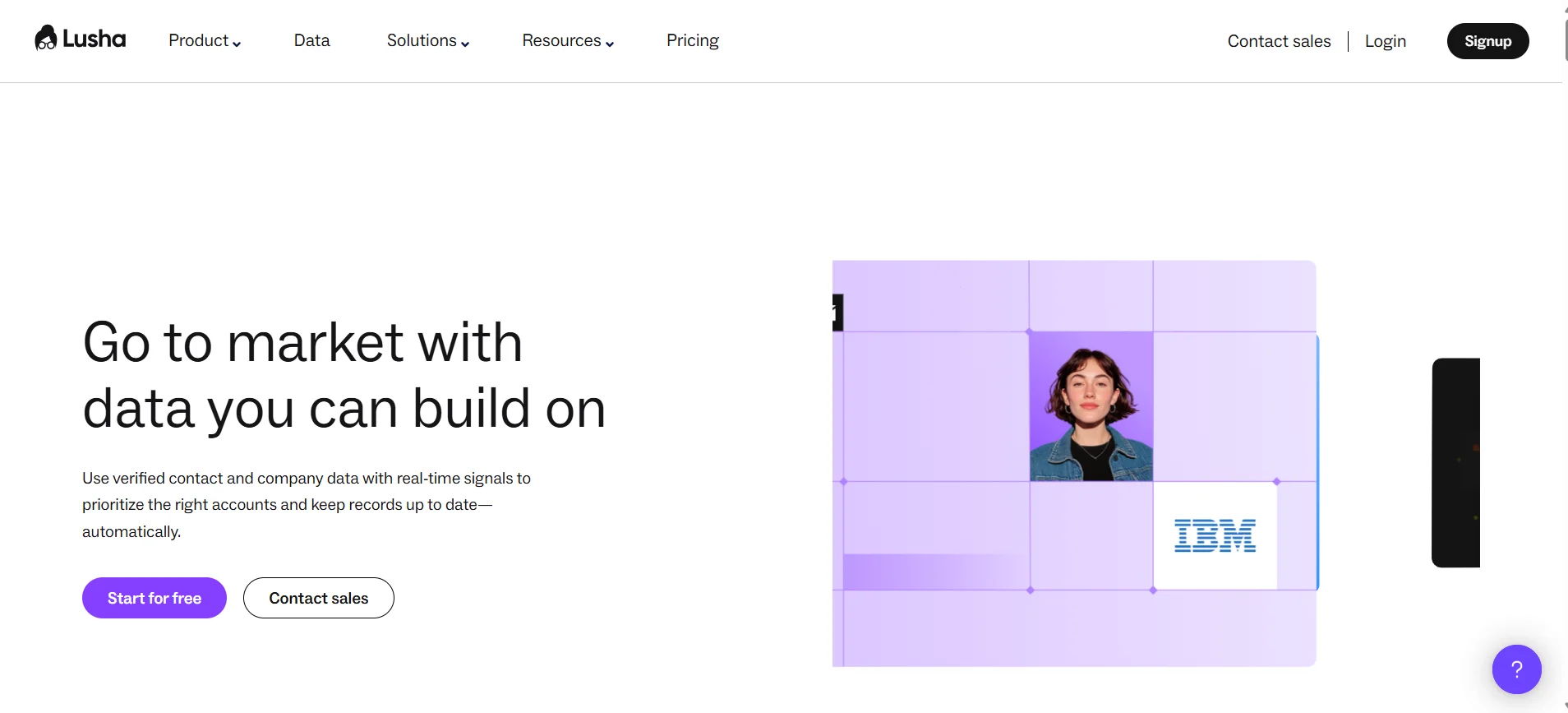
Lusha has built its reputation on speed and simplicity.
It's the kind of tool SDRs reach for when they need verified contact information fast — without navigating a complex interface or managing a heavy outbound stack.
The core appeal is straightforward.
You browse a LinkedIn profile, the Chrome extension surfaces the contact details, and you move that prospect into your outreach workflow within seconds.
For teams prioritizing quick lead collection over deep automation, that simplicity is genuinely valuable.
Lusha works best for SDRs and recruiters who need fast access to verified business contacts while prospecting manually on LinkedIn.
Teams use it to enrich prospect records quickly before launching outbound campaigns — reducing the gap between identifying a lead and having everything needed to reach out confidently.
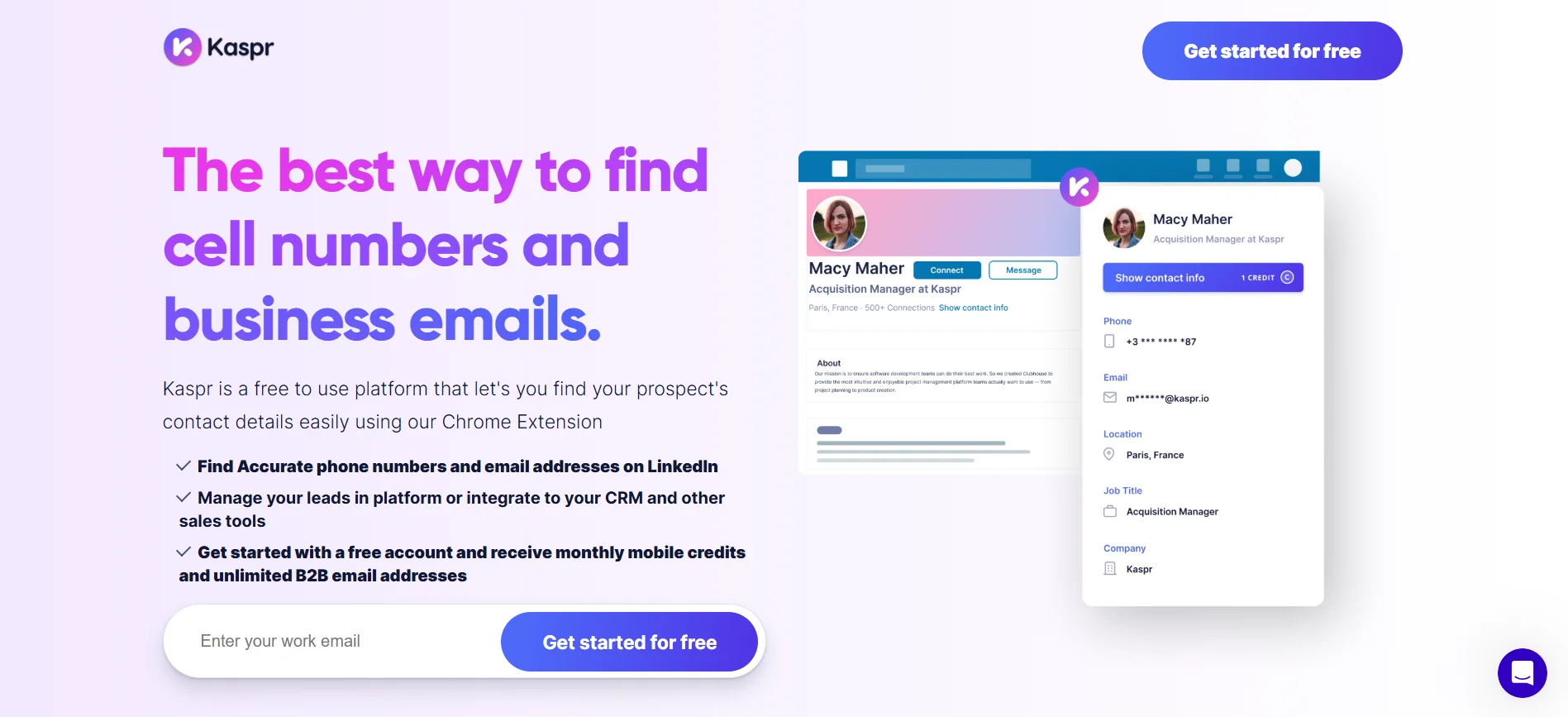
Kaspr takes a similar approach to Lusha but leans even more heavily into LinkedIn-first prospecting.
It's designed for sales reps who spend most of their prospecting time on LinkedIn and want instant access to verified emails and phone numbers without leaving the platform.
The workflow is minimal by design.
You find a profile, Kaspr surfaces the contact details, and you push that prospect into your sequence — all without breaking your LinkedIn prospecting rhythm or switching between multiple tabs.
Kaspr helps sales reps build qualified prospect lists directly from LinkedIn searches and conversations.
Instead of manually copying contact details across tools, you can collect verified information in real time and move prospects into outbound sequences faster — keeping daily prospecting volume high without adding extra steps to the workflow.
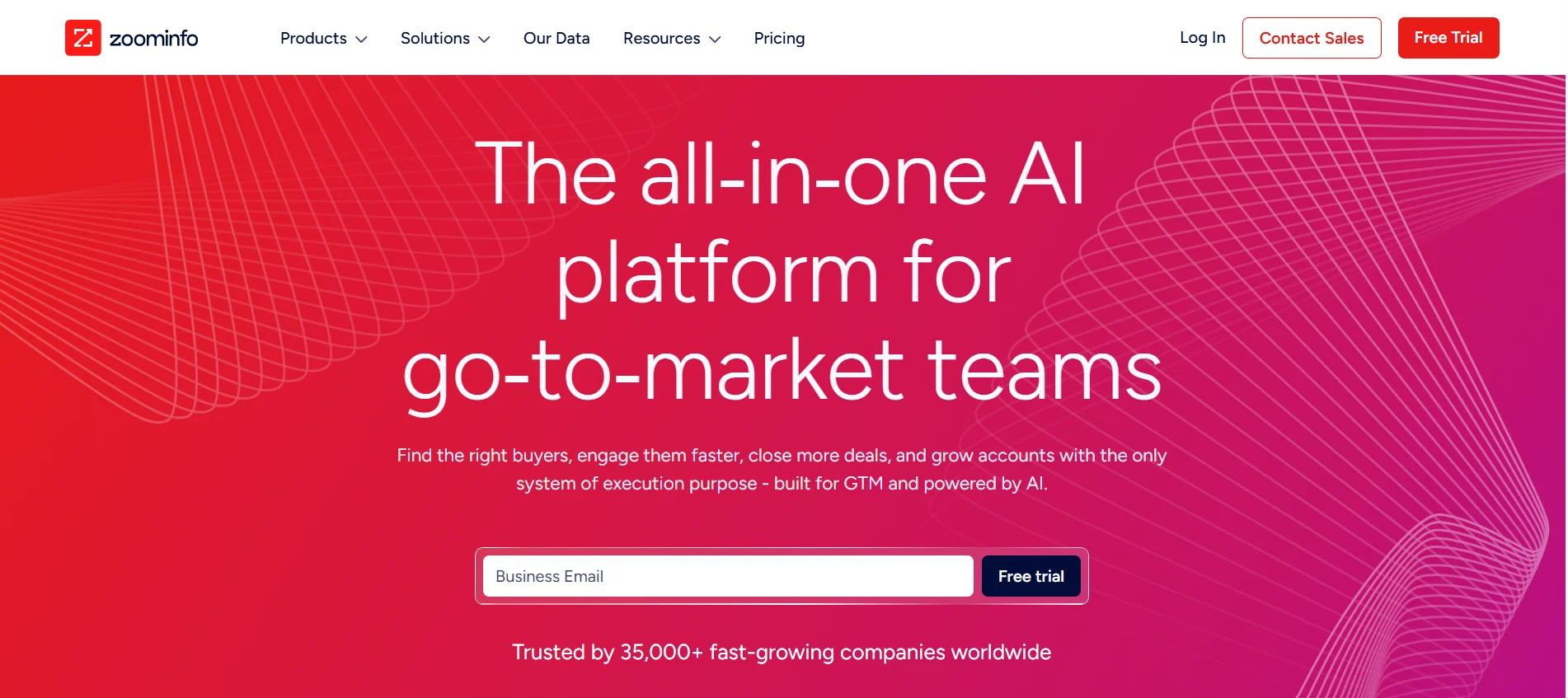
ZoomInfo operates at a scale most tools on this list simply don't match.
It's an enterprise-grade sales intelligence platform built for large organizations managing complex outbound operations, account-based marketing, and territory planning across multiple teams.
The depth of data is what sets it apart.
Beyond basic contact enrichment, you get organizational charts, buying intent signals, technographic data, and workflow automation — all pulling from one of the largest B2B databases available.
For enterprise sales teams, that intelligence changes how they prioritize and execute outbound.
ZoomInfo helps enterprise sales teams run account-based outbound campaigns using enriched company intelligence and real-time intent data.
Teams use it for territory planning, identifying key decision-makers across large organizations, and connecting buying signals directly into their outbound execution workflows.
Suggested Reading:
12 Free + Affordable Zoominfo Competitors & Alternatives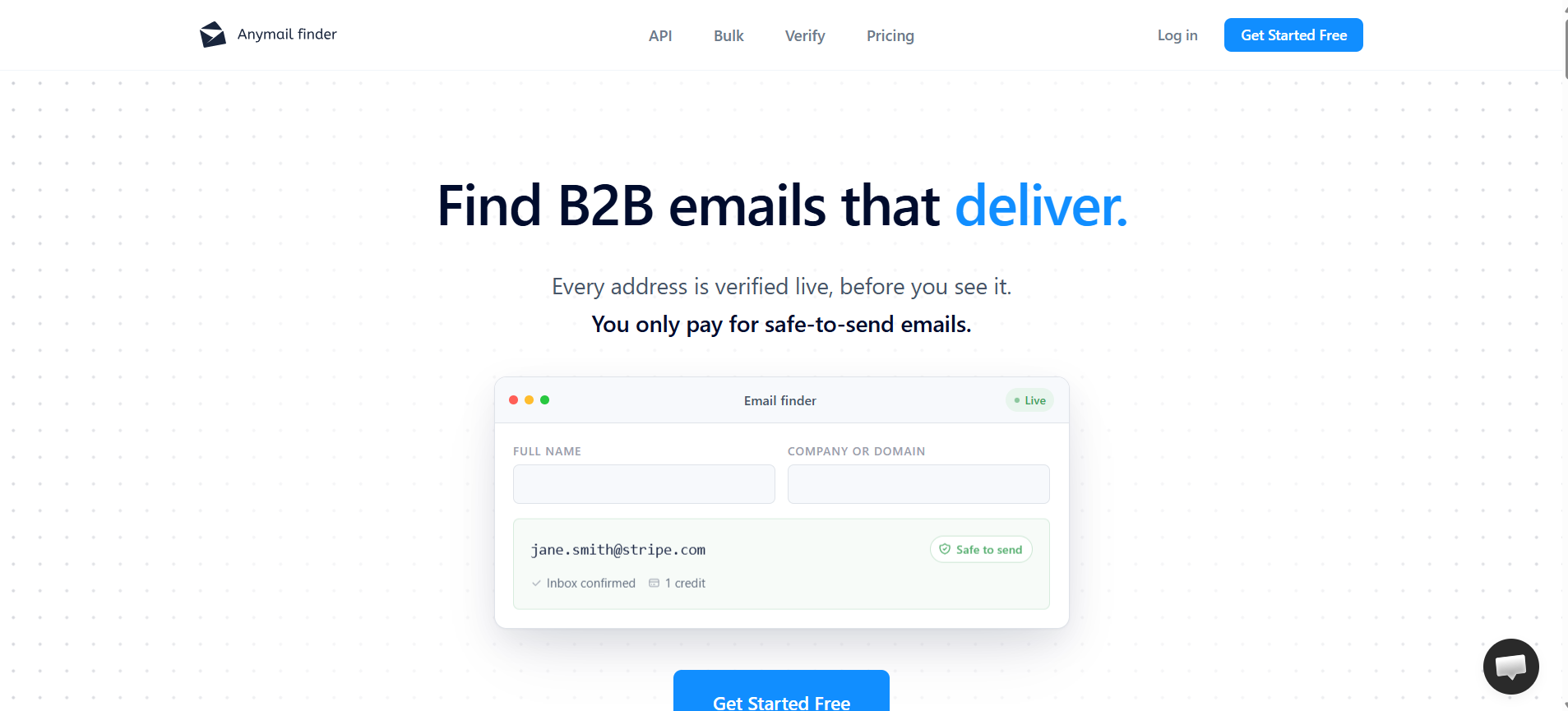
Anymail Finder does one thing and commits to it fully — finding and verifying email addresses with high accuracy. There's no sequencing, no enrichment suite, no automation layer.
Just a focused verification engine built for teams that care deeply about email quality over workflow complexity.
What makes its pricing model stand out is that you only pay for valid results. If an email can't be verified, you don't get charged for it.
For teams already running outreach infrastructure elsewhere, that kind of precision-focused approach removes a meaningful source of bounce risk.
Anymail Finder works best as a verification layer for teams that already have prospecting and outreach tools in place.
If protecting sender reputation and reducing bounce rates is the primary concern, it handles that specific problem better than most full-stack platforms do.
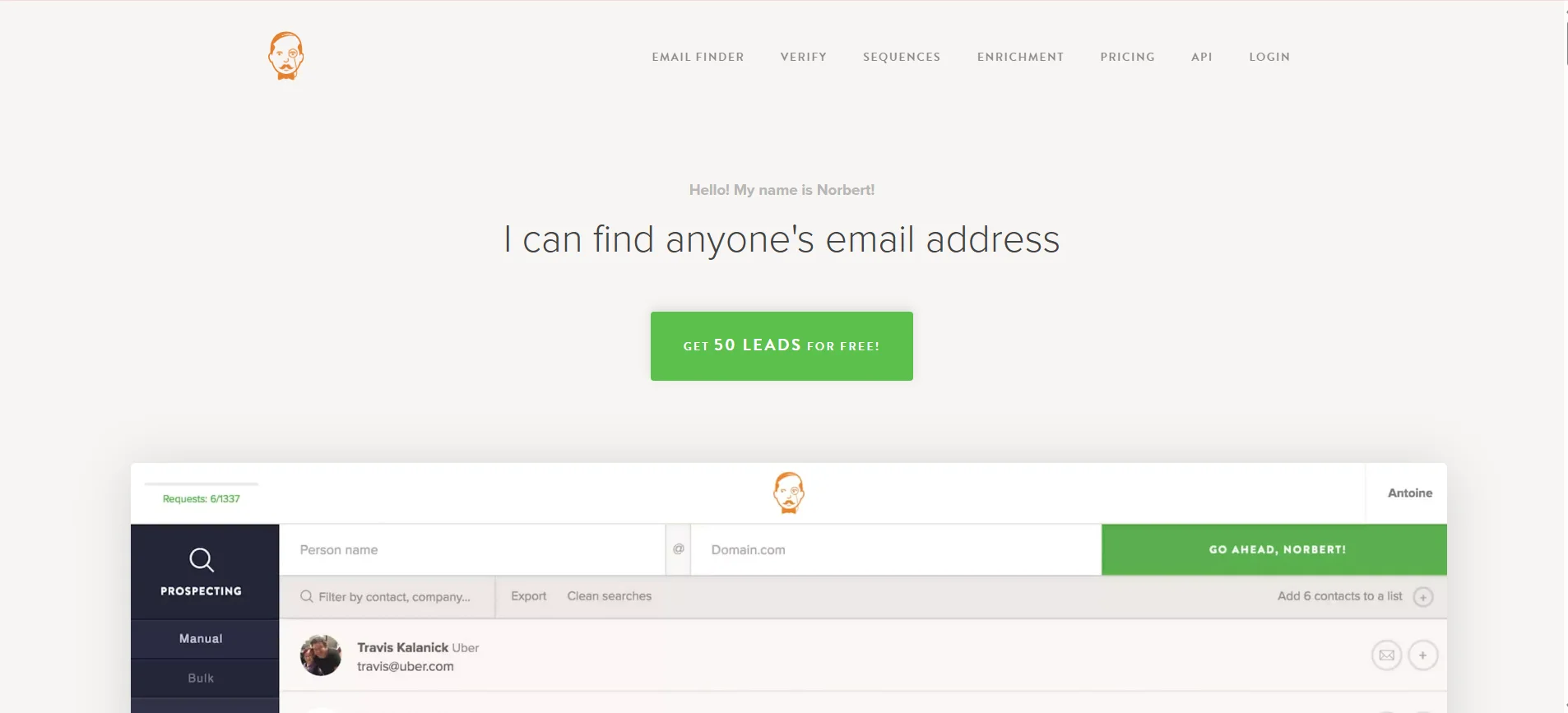
Voila Norbert sits comfortably in the lightweight end of the email finder category.
It's not trying to compete with full outbound platforms — it's built for freelancers, marketers, and small businesses that need a straightforward way to find business emails without investing in a complex prospecting stack.
The appeal is accessibility. You don't need to understand outbound automation or manage complicated workflows to get value from it.
If you have a name and a company domain, Voila Norbert can surface a verified email address in seconds — keeping prospecting simple for teams where simplicity is the priority.
Voila Norbert helps freelancers and small teams identify verified business emails quickly without building a dedicated outbound stack.
It fits naturally into lightweight prospecting workflows where affordability and ease of use matter more than advanced automation or enterprise-level enrichment capabilities.
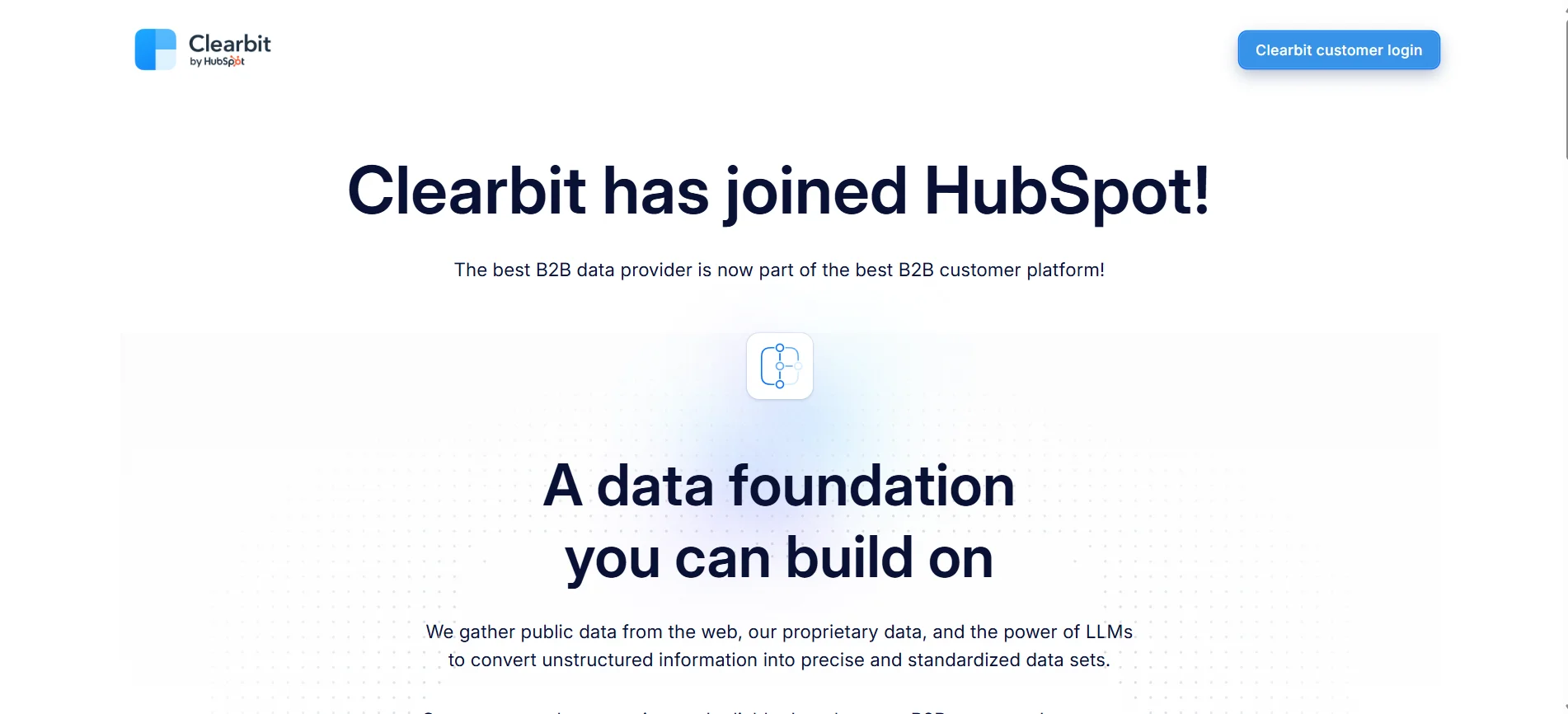
Clearbit approaches the outbound problem from a different direction entirely.
Rather than helping you find new contacts from scratch, it focuses on enriching the leads you already have — making it more of a data intelligence layer than a traditional prospecting tool.
Marketing teams and RevOps professionals tend to get the most value from it.
When inbound leads come in with incomplete information, Clearbit fills the gaps automatically — appending company size, industry, funding data, and technographics in real time so your team can qualify and route leads faster.
Clearbit helps marketing and RevOps teams improve lead qualification and segmentation before outbound campaigns begin.
Instead of prospecting from zero, teams use it to enrich existing lead records, identify high-value website visitors, and sharpen targeting accuracy across the entire sales workflow.
RocketReach takes a broad approach to professional contact discovery.
It's not narrowly focused on one industry or use case — instead, it gives recruiters, agencies, and outbound teams fast access to verified emails and phone numbers across a wide range of industries and geographies.
That versatility is its main strength. Whether you're sourcing candidates, building partnership outreach lists, or running agency prospecting campaigns.
RocketReach covers the contact discovery side without requiring deep workflow configuration or a steep learning curve.
RocketReach works well for recruiters, agencies, and outbound teams that need quick access to verified professional contact information across industries.
It fits naturally into workflows where speed of contact discovery matters more than deep enrichment or built-in outreach automation.
Thirteen tools, thirteen different strengths. The hard part isn't finding a Hunter.io alternative — it's picking the one that actually fits how your team prospects, scales, and executes outreach today.
The right answer depends on three things: your workflow complexity, your deliverability needs, and your budget.
Start by mapping out what your outbound process actually looks like today.
If you only need to verify emails before sending campaigns you already manage elsewhere, a focused tool like Anymail Finder does the job cleanly.
But if your team handles prospecting, enrichment, sequencing, follow-ups, and reply management — you need a platform that connects all of those steps, not five separate tools trying to work together.
The more complex your workflow, the more a unified platform saves you in time, cost, and operational friction.
Finding contacts is only half the equation. Getting emails delivered consistently as volume grows is where many outbound teams quietly lose ground.
As you scale, factors like inbox rotation, automated warm-up, sender reputation management, and bounce monitoring become critical.
Choosing a tool without these capabilities early means rebuilding your infrastructure later — usually at the worst possible time.
A freelancer and an enterprise sales team have completely different needs, and most platforms are built with one of those buyers in mind.
Smaller teams should prioritize simplicity and affordability. Larger organizations need advanced enrichment, compliance support, and deep CRM integrations.
Let your current operational maturity guide the decision — not just the feature list.
Most tools on this list solve one or two parts of the outbound puzzle.
Oppora.ai is built to run the entire thing — from finding the right prospect to booking the meeting — inside one connected workflow.
With Oppora, you don't stitch together separate tools for lead discovery, enrichment, email writing, and follow-ups.
Eight AI sales agents handle each step automatically — finding leads, verifying contacts, generating personalized outreach, managing replies, and syncing everything to your CRM.
You build the workflow once. Oppora keeps running it without daily input from your team.
Reaching more people isn't the goal — reaching the right people at the right time is.
Oppora filters prospects using real buying signals like:
AI scoring then ranks those prospects by likelihood to convert — so your team focuses effort on opportunities that are actually worth pursuing instead of working through unqualified lists.
Deliverability isn't an afterthought inside Oppora. Inbox rotation, automated warm-up, spam word checks, domain health monitoring, and sender matching are built directly into the platform.
As your outbound volume grows, the infrastructure scales with it — protecting your sender reputation without requiring a separate deliverability tool alongside everything else.
The best Hunter.io alternative isn't the most popular one — it's the one that matches how your team actually runs outbound.
Some teams need simple email verification. Others need enrichment, AI personalization, multichannel outreach, and scalable infrastructure all working together without the overhead of managing multiple tools.
If you're at the point where outbound needs to run more consistently and with less manual effort, Oppora.ai is worth exploring.
It's built specifically for teams that want the entire workflow — from first contact to booked meeting — running on autopilot.
Hunter.io remains useful for basic email lookup and small-scale prospecting. However, teams running high-volume outbound or needing enrichment, automation, and multichannel workflows will likely find it limiting. It works best as a starting point, not a long-term outbound solution for growing teams.
Yes, but it adds cost and complexity. Many teams combine a data tool with a separate outreach platform. The better approach is finding one platform that handles prospecting, verification, and outreach together — reducing tool switching, integration issues, and overlapping subscription costs across your outbound stack.
Extremely important. Poor verification leads to high bounce rates, which damage your sender reputation and hurt inbox placement over time. Always prioritize platforms with strong built-in verification systems — or use a dedicated verification tool alongside your outreach platform before launching any cold email campaign.
Yes. Tools like Kaspr, Lusha, GetProspect, and RocketReach are widely used by recruiters for sourcing candidate contact information directly from LinkedIn. They support the same contact discovery workflow but applied to talent acquisition instead of traditional sales prospecting.
Waterfall enrichment runs contact data through multiple data providers sequentially until a verified result is found. This significantly improves email match rates compared to relying on a single provider. For outbound teams, it means fewer gaps in prospect lists and stronger overall campaign deliverability.
Summarize with AI
Share