Home
Blog
Oppora's Claude MCP is Live. Connect our Email Database & Outreach features with any tool to build smart automations inside Claude. Start for Free
Home
Blog
Stephen Parker
Published June 23, 2026
10 min
Try Oppora AI
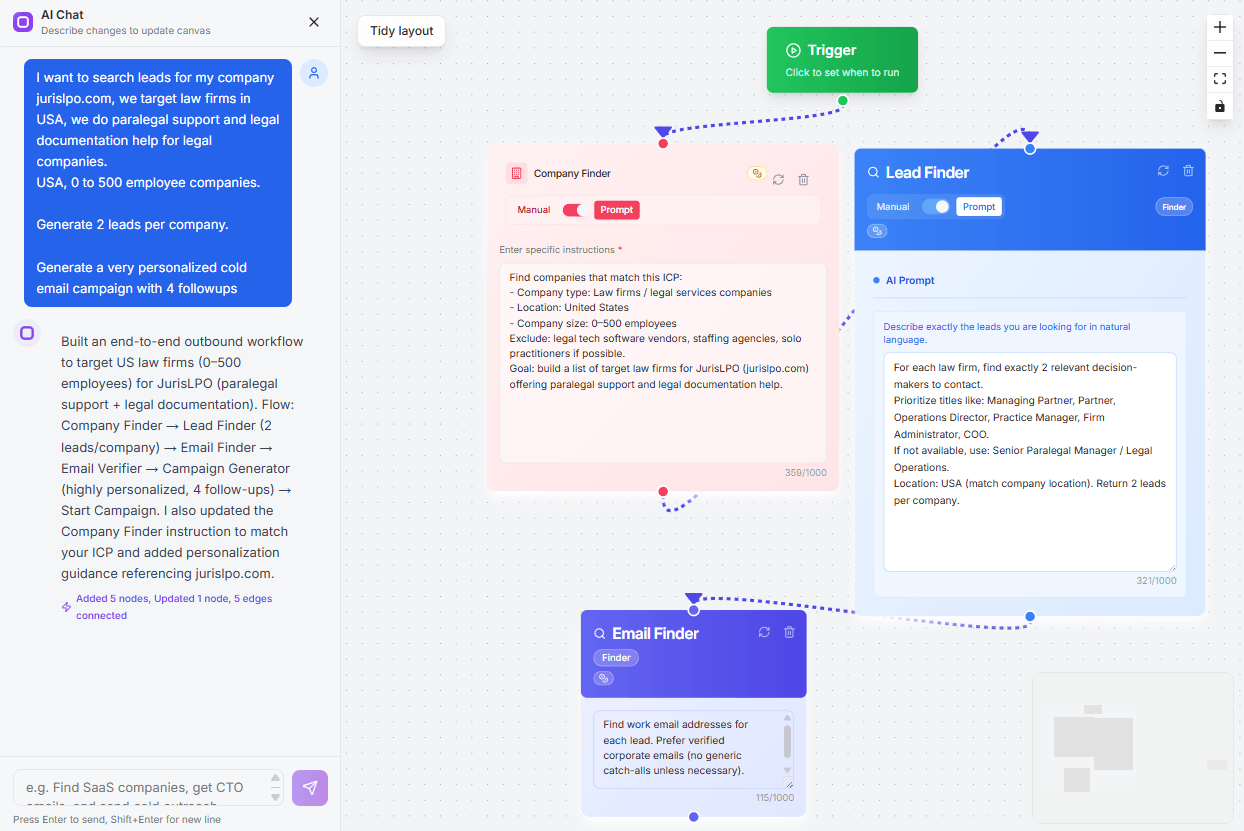
Create Self-Running Agentic Sales Workflows like N8N just by chatting with AI
Get Started for FREE
Getting clients for an outsourcing business sounds simple until you actually start trying.
You know your team can deliver. You know your pricing is competitive. But finding companies that trust you enough to outsource work is the harder part.
The good news is you don’t need a huge ad budget to build a steady client pipeline. You need the right mix of low-cost channels, consistent outreach, and a clear way to reach decision-makers before your competitors do.
In this guide, you’ll learn:
Before you start outreach, focus on companies that already have a clear reason to outsource.
The best prospects are usually businesses that need more execution capacity but do not want to hire full-time teams immediately. These companies often care about speed, flexibility, and cost control.
Key industries that commonly need outsourcing include:
Now look for buying signals.
Strong outsourcing signals include:
These signals show urgency.
When you target companies that already need help, your outreach feels more relevant, and your sales conversations start with a real business problem.
Once you know who is most likely to outsource, the next question is where you should spend your time.
Some channels bring faster conversations. Some build trust slowly. Some cost nothing but need consistency.
Here is a quick comparison to help you choose the right mix.
The right method depends on your stage.
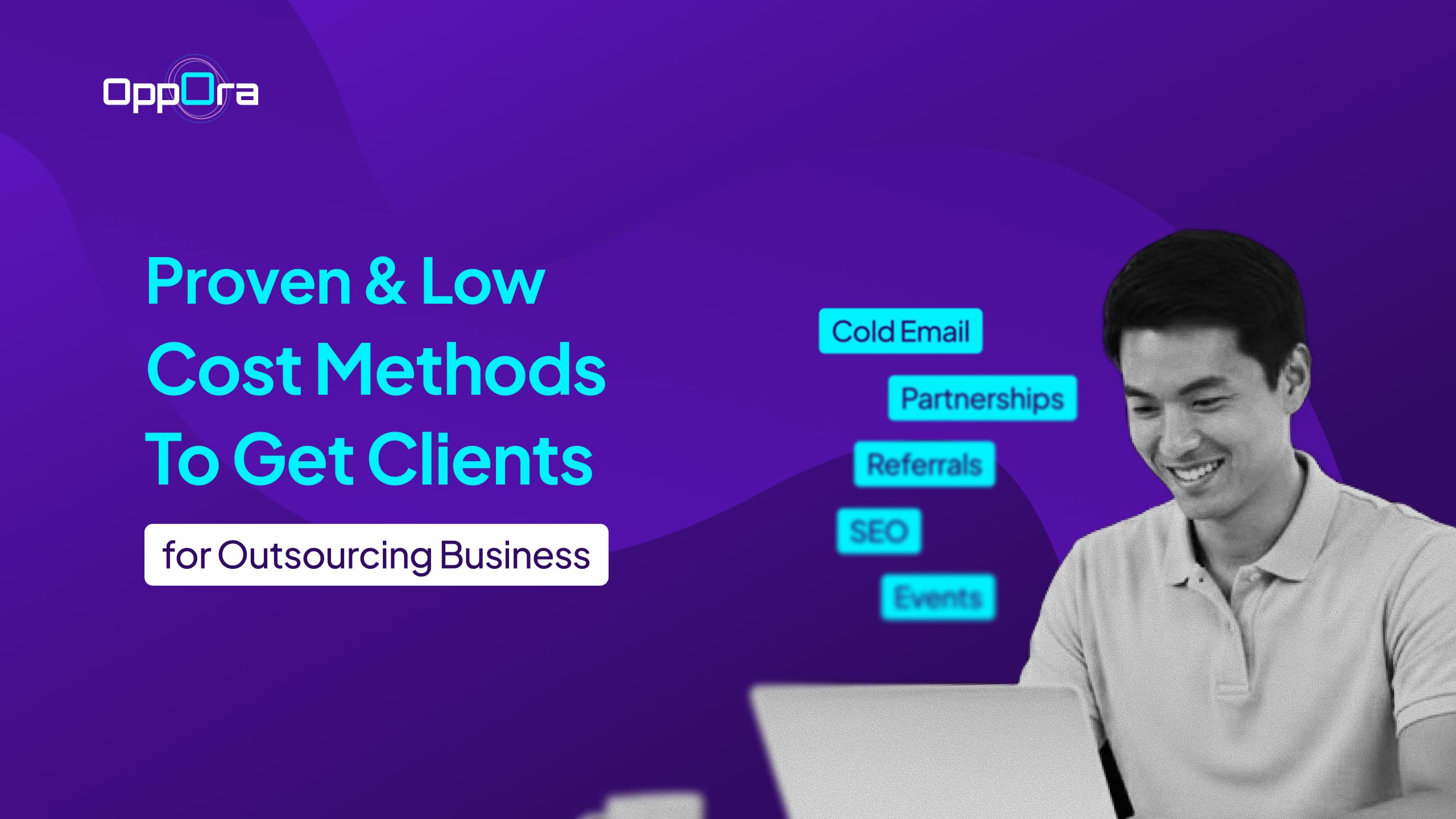
If you are just starting, referrals, freelance platforms, communities, and job boards can help you get early conversations without upfront cost.
If you want faster B2B growth, cold email and LinkedIn outreach usually give you more control because you can directly reach companies that match your ideal client profile.
For long-term growth, SEO, partnerships, and events can build authority and trust over time.
The best outsourcing businesses don't rely on one channel—they build a repeatable acquisition system using multiple methods.
Now that you know which channels fit your budget, let’s look at how to use them in practice.
You do not need to use all of these methods at once. Start with two or three channels that match your current stage, then turn the ones that work into a repeatable system.
Cold email is still one of the fastest ways to get clients for an outsourcing business because you are not waiting for buyers to find you.
You can directly reach founders, CEOs, HR leaders, operations heads, and procurement managers who may already need external support.
The key is to avoid generic mass emails.
Keep your message short, specific, and focused on the problem you solve. Mention why you are reaching out, what outcome you can help with, and make the next step easy.
Follow-ups matter too.
Many prospects will not reply to the first email, but a helpful follow-up can bring the conversation back at the right time.
Oppora.ai makes this process easier by helping you find targeted companies from a 1B+ lead database, access verified decision-maker emails, generate personalized email copy with AI, automate follow-ups, and scale outreach through multiple mailboxes.
The result is a faster pipeline with less manual prospecting.
One of the easiest ways to find high-intent outsourcing prospects is to look at companies that are already hiring.
If a company is posting jobs on LinkedIn Jobs, Indeed, Wellfound, or RemoteOK, it usually means they need more manpower.
That is a strong signal for your outsourcing offer.
Instead of pitching your service cold with no context, you can connect your message to what they are already trying to solve.
Look for hiring signals such as:
Then position your outsourcing service as a faster, more flexible alternative to hiring full-time employees.
You are not just offering “extra help.” You are helping them solve capacity problems without slowing down growth.
Suggested Reading:
Lead Generation for Consulting Companies: 11 High-ROI MethodsLinkedIn is not only for outreach. It can also help prospects trust you before you ever message them.
When a business owner checks your profile, they should quickly understand what you do, who you help, and why your outsourcing service is worth considering.
Start by optimizing your headline, banner, about section, and featured posts around your core service.
Then share content that proves your expertise.
You can post client results, short case studies, outsourcing tips, hiring cost comparisons, workflow breakdowns, or common mistakes companies make when scaling teams.
The goal is not to sound like a big brand.
The goal is to look credible, active, and helpful.
When you engage with founders, agency owners, and decision-makers consistently, your outreach becomes warmer because they have already seen your name and ideas before.
If you already have happy clients, referrals can become your lowest-cost acquisition channel.
Most outsourcing businesses underuse this because they wait for referrals to happen naturally.
A better approach is to ask at the right moment.
The best time is after you deliver a strong result, solve a difficult problem, or receive positive feedback from a client.
Keep the ask simple.
You can say something like, “Do you know one or two business owners who might also need help with this?”
You can also offer referral incentives, discounted future work, or priority support in exchange for successful introductions.
Collect LinkedIn testimonials as well.
A strong testimonial makes future prospects feel safer because they can see proof from a real client, not just your own claims.
B2B marketplaces can help you reach buyers who are already searching for outsourcing providers.
Unlike cold outreach, these platforms attract prospects with existing demand.
You can list your outsourcing business on platforms like:
These sites work especially well if you sell services like software development, design, marketing, customer support, virtual assistance, or back-office operations.
The key is to make your profile specific.
Do not just say you provide outsourcing services. Mention your niche, industries served, team size, delivery process, pricing model, and client outcomes.
Reviews also matter a lot.
Even a few strong reviews can help you stand out because buyers on these platforms are usually comparing multiple vendors before reaching out.
Agency partnerships can create consistent, recurring work because many agencies sell more than they can deliver internally.
That is where your outsourcing business can become useful.
You can partner with:
The model is simple.
They own the client relationship, and you become the backend execution partner. This is often called a white-label model because your team delivers the work under their brand.
This works well because agencies already have clients, sales processes, and demand.
You do not need to convince the end client from scratch.
Your pitch should focus on reliability, quality, communication, turnaround time, and how you can help the agency take on more work without hiring internally.
Content is slower than cold email, but it can become a strong long-term channel.
When prospects search for answers, compare outsourcing options, or try to understand whether they should hire internally or outsource, your content can bring them into your world.
Start with buyer-focused topics.
Write blog posts around questions your ideal clients already ask, such as how to reduce hiring costs, how to scale support teams, or when to outsource development work.
You can also create:
The goal is to make your expertise easy to find.
Over time, content builds authority. It also supports your outreach because prospects can read your posts, watch your videos, and understand your thinking before booking a call.
Communities can help you build relationships with founders, operators, and business owners without spending money on ads.
The mistake most people make is joining a group and immediately pitching their service.
That rarely works.
Instead, focus on value-first engagement.
Join Slack groups, Facebook communities, Reddit forums, startup founder groups, and Discord communities where your ideal clients spend time.
Then look for questions you can answer.
If someone asks about hiring, operations, scaling, customer support, admin work, or technical execution, give a useful answer without pushing your service immediately.
This builds familiarity and trust.
When people see you helping consistently, they are more likely to check your profile, ask what you do, or remember you when they need outsourcing support.
You do not always need large conferences to find good clients.
Smaller events often create better conversations because people are more accessible and less overwhelmed.
Look for local business meetups, startup networking events, industry-specific seminars, chamber of commerce events, and niche founder gatherings.
These events work well because you can understand pain points in real conversations.
You hear what business owners are struggling with, what they are trying to hire for, and where their teams are overloaded.
That makes your follow-up much stronger.
Instead of sending a generic message later, you can reference the exact conversation and connect your outsourcing service to their current need.
Smaller events may not give you hundreds of leads, but they can help you build higher-quality relationships that convert faster.
Manual prospecting can work in the beginning, but it becomes difficult to manage when you want consistent growth.
You have to find the right companies, identify decision-makers, verify emails, write personalized messages, send follow-ups, and track replies. Oppora.ai helps you turn all of this into a structured outreach workflow instead of doing everything manually.
The first step is to define what your best-fit outsourcing client looks like.
With Oppora.ai, you can search from a database of 1B+ B2B contacts and narrow your list using filters that match your target market.
You can filter by:
This helps you avoid random outreach and focus only on companies that are more likely to need outsourcing support.
Once you find the right companies, you need to reach the people who can actually make a buying decision.
Oppora.ai helps you identify decision-makers such as:
You also get access to verified business emails, so your outreach list is cleaner and more reliable from the beginning.
After building your prospect list, the next step is creating messages that feel relevant.
Oppora.ai helps you generate personalized cold emails based on the prospect’s company, role, industry, and possible pain points.
You can use AI variables to tailor messages around:
This makes your outreach feel less generic and more connected to the prospect’s situation.
Suggested Reading:
10 Best AI Outreach Agent to Scale Outbound & Book More DemosMost prospects will not reply to your first email, so follow-ups are important.
Oppora.ai lets you create automated follow-up sequences that continue the conversation without manual tracking.
It also helps with:
This makes it easier to manage conversations without missing interested leads.
Suggested Reading:
How to Follow Up on Cold Email: Timing, Tips + 8 TemplatesAs your outreach starts working, you need a way to reach more prospects without adding more manual tasks.
Oppora.ai helps you scale by allowing you to:
Oppora.ai helps outsourcing businesses spend less time searching for prospects and more time building relationships with qualified decision-makers.
Getting clients for an outsourcing business does not have to depend on expensive ads or random referrals.
You can build a steady pipeline by targeting the right companies, using low-cost acquisition channels, and showing prospects how your service solves a real capacity problem.
Start with the methods that give you the fastest feedback, like cold email, LinkedIn outreach, job boards, and referrals.
Then support them with long-term channels like content, partnerships, marketplaces, and communities.
The goal is not to chase every possible lead.
The goal is to create a repeatable system that helps you consistently find qualified decision-makers, start relevant conversations, and turn those conversations into long-term outsourcing clients.
Start with your closest network, LinkedIn outreach, job boards, and cold email. Look for businesses that are hiring, growing, or overloaded, then offer one clear service that solves a specific problem.
Cold email and referrals are usually the fastest methods. Referrals work because trust already exists, while cold email lets you directly reach decision-makers who match your ideal client profile.
Industries like SaaS, eCommerce, healthcare, IT services, staffing, real estate, finance, marketing, and customer support often outsource because they need flexible teams to reduce costs and scale faster.
You can use cold email, LinkedIn outreach, referrals, job boards, freelance platforms, B2B communities, partnerships, and marketplaces to start conversations without spending heavily on ads.
Tools like Oppora.ai can help you find leads, verify emails, personalize outreach, automate follow-ups, manage replies, and track campaign performance from one workflow.
Summarize with AI
Share