Home
Blog
Find 500 B2B Contacts for Free Every Month with Built-In Outreach.
Home
Blog
Manasa Goli
Published March 21, 2026
4 min
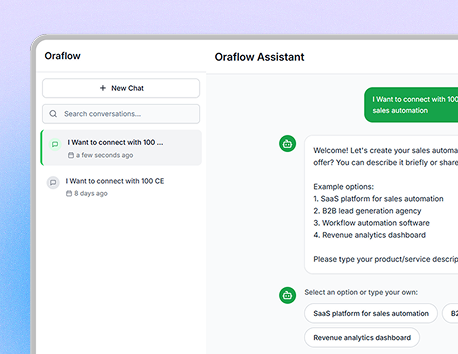
Try Oppora AI
Create Self-Running Agentic Sales Workflows like N8N just by chatting with AI
Get Started for FREE
Sales outreach today is harder than it looks.
You’re not just competing with other businesses anymore.
You’re competing with dozens of messages sitting in the same inbox.
That’s why a strong sales outreach strategy is no longer optional.
It’s the difference between getting ignored… and getting replies that turn into real conversations.
In this guide, you’ll learn how to build a strategy that actually works in the real world.
Before you improve your outreach, you need to understand what’s going wrong.
A sales outreach strategy is your structured approach to reaching potential customers through channels like email, LinkedIn, and calls.
On paper, this sounds simple.
But in reality, most outreach fails because it focuses on activity instead of relevance.
So even if you’re sending messages daily, you don’t see meaningful results.
The problem is not effort.
It’s structure.
Everything in your outreach depends on who you target.
If your audience is vague, your messaging will also feel vague.
And vague messages don’t get replies.
When you get this right, your sales outreach strategy becomes much easier to execute.
Because now, you’re not guessing.
You’re targeting with intent.
Once you know who you want, the next step is finding them.
But this is where many teams make critical mistakes.
They focus on volume instead of quality.
A smaller list of the right people will always outperform a large list of random contacts.
Because outreach is not a numbers game anymore.
It’s a relevant game.
Now that you have your leads, you need to decide where to reach them.
Different people respond differently depending on the platform.
The best sales outreach strategy doesn’t rely on just one channel.
It combines multiple touchpoints to stay visible without being intrusive.
This is where most outreach breaks.
People don’t ignore outreach because they hate sales.
They ignore it because it feels irrelevant.
How to make your messages stand out
When your message feels like it was written for them, not sent to everyone, replies start coming in.
Personalization is important.
But doing it manually for every lead is not sustainable.
This creates a gap between quality and scale.
What smart personalization looks like
A strong sales outreach strategy balances personalization with efficiency.
You don’t need to customize everything.
You need to customize what matters.
Most deals don’t happen from the first message.
They happen after consistent follow-ups.
But many people either give up too early… or follow up in a way that feels pushy.
A simple follow-up structure you can use
The goal is not to chase.
It’s to stay relevant.
If you don’t track your outreach, you’re just guessing.
And guessing doesn’t scale.
Metrics that actually matter
A good sales outreach strategy evolves over time.
Small improvements here can lead to big results.
At this point, it’s clear that a sales outreach strategy depends on multiple moving parts working together — finding the right leads, reaching out at the right time, and following up without gaps. The challenge is not defining this process, but actually running it consistently without manual effort.
Oppora is an AI sales agent that helps you run your entire outreach process just by interacting with it, instead of managing multiple tools and steps separately.
Instead of handling prospecting, data verification, outreach, and follow-ups across different workflows, it brings everything into one system so your strategy can actually execute without breaking.
Here’s how it supports your outreach in practice:
👉 Instead of managing outreach step-by-step, you’re setting up a system that can run continuously and adapt based on signals and triggers.
Because in reality, a sales outreach strategy only works when execution is consistent — not when it depends on how much manual effort you can put in every day.
By now, you’ve seen what goes into building a strong sales outreach strategy, from defining your ideal customer to writing relevant messages and following up consistently.
But knowing these steps is only half the job, because the real challenge begins when you try to execute all of this together without things falling apart.
Most outreach strategies don’t fail because the approach is wrong. They fail because consistency is hard to maintain across targeting, personalization, follow-ups, and replies.
Small gaps start to appear — missed follow-ups, repetitive messaging, delayed responses — and over time, these gaps slow down your entire pipeline.
That’s why the focus should not just be on creating a strategy, but on making sure that strategy runs smoothly without constant effort.
Because in the end, a sales outreach strategy works only when every step connects and keeps moving forward.
Fix that, and everything else improves naturally — better replies, better conversations, and a more predictable pipeline.
Summarize with AI
Share