Home
Blog
Find 500 B2B Contacts for Free Every Month with Built-In Outreach.
Home
Blog
Manasa Goli
Published March 21, 2026
5 min
Try Oppora AI
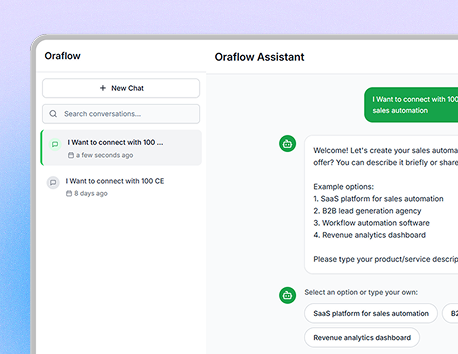
Create Self-Running Agentic Sales Workflows like N8N just by chatting with AI
Get Started for FREE
Cold email isn’t dead — but poor deliverability is.
You can have the perfect offer, sharp copy, and strong targeting… but if your email lands in spam, none of it matters.
And in 2025–2026, deliverability has become stricter than ever. Email providers now evaluate not just your setup, but also your behavior, engagement, and patterns.
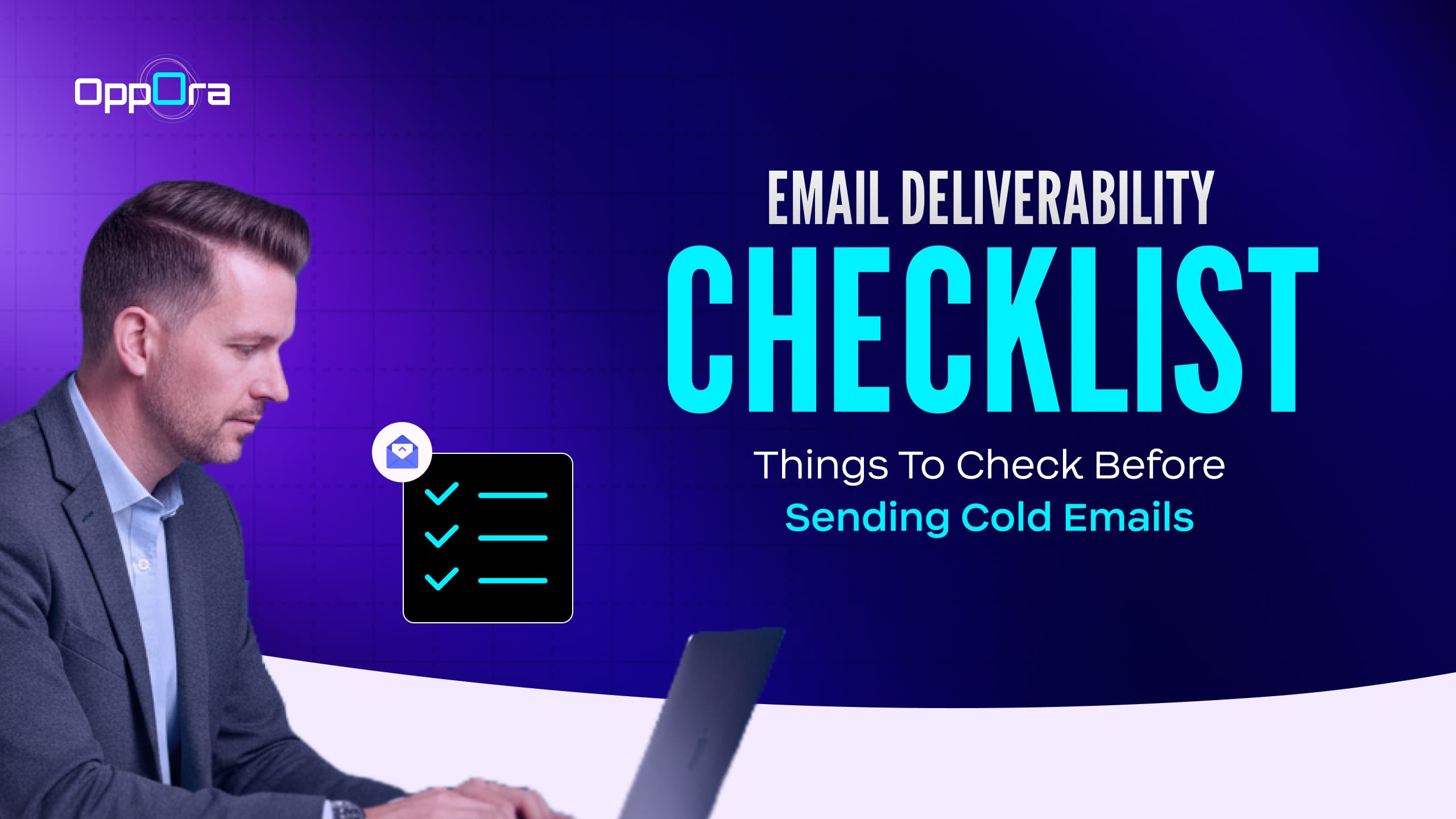
That’s why before sending any campaign, you need a proper email deliverability checklist — not guesswork.
Let’s break down the 15 things you must check before hitting send.
Earlier, setting up SPF, DKIM, and sending emails was enough.
Not anymore.
Today, inbox providers evaluate your overall sender behavior, including:
Even if your technical setup is perfect, poor engagement can still push your emails into spam.
For example: If you send 500 emails and barely get replies, email providers assume your emails are irrelevant — and start filtering them out.
👉 This is where most teams fail — they focus on “sending more emails” instead of “improving inbox placement.”
Deliverability is no longer a technical problem alone.It’s a strategy + behavior + quality problem.
Let’s go through the 15 most important checks — with examples.
This is the foundation of email deliverability.
Without these, your emails may:
👉 Example: If your domain is yourcompany.com and SPF isn’t configured, Gmail may treat your email as spoofed — even if everything else looks fine.
Never use your main business domain for cold outreach.
Why?
Because cold email always carries some risk:
If something goes wrong, your primary domain (used for clients, transactions, etc.) can get affected.
👉 Safer approach:
This protects your core brand while allowing you to scale outreach safely.
A new domain has zero trust.
Sending emails at scale immediately is one of the fastest ways to land in spam.
👉 Proper warm-up process:
This builds trust gradually.
👉 Think of it like this: You wouldn’t trust a brand-new email sender sending 500 emails on day one — neither do inbox providers.
Consistency is a major signal for email providers.
Sudden spikes look suspicious.
👉 Bad example:
This looks like automation or spam activity.
👉 Good practice:
Consistency builds reputation. Spikes destroy it.
Your list quality directly impacts deliverability.
If your list contains:
Your bounce rate increases — and that hurts your domain reputation.
👉 Always:
👉 Example: If you send 1,000 emails and 150 bounce, that’s a 15% bounce rate — a major red flag.
This is where a cold email checker or email verifier becomes essential.
It helps you:
👉 Ideal benchmark:
👉 Example: Sending unverified emails at scale is like dialing random phone numbers — inefficient and risky.
Spam filters are smarter than ever.
They detect patterns in language, formatting, and tone.
👉 Avoid:
👉 Instead:
👉 Example:
❌ “We offer cutting-edge AI solutions to scale your business”
✅ “Saw you're hiring SDRs — curious how you're handling outbound right now?”
Human emails = better replies = better deliverability.
Too many links or images signal promotional content.
👉 Best practices:
Why?
Because most real conversations don’t include multiple links or banners.
Personalization improves engagement — but only if it’s genuine.
👉 Good personalization:
👉 Bad personalization:
Inbox providers track engagement. Better personalization → more replies → better deliverability.
Your subject line determines whether your email gets opened — or ignored.
👉 Best practices:
👉 Examples:
Avoid anything that feels like an ad.
Sending all emails from one inbox increases risk.
👉 Instead:
Example:
This keeps your sending behavior more natural and protects your domain.
This might feel counterintuitive — but it’s important.
If recipients can’t opt out, they’re more likely to: 👉 Mark your email as spam
And spam complaints are far worse than unsubscribes.
👉 A simple line like: “Let me know if this isn’t relevant, happy to not follow up.”
This reduces complaints and builds trust.
Deliverability isn’t “set and forget.”
You need to track:
👉 If replies drop: Your targeting or messaging might be off.
👉 If bounce rate increases: Your list quality is poor.
Metrics tell you where the problem is.
Never launch a full campaign blindly.
👉 Instead:
This helps you catch issues early before scaling.
This is one of the most overlooked steps.
A cold email checker helps you:
Instead of guessing, you fix issues before they impact your campaign.
This is exactly where most tools fall short.
They help you send emails — not fix deliverability.
Oppora.ai is an AI-powered prospecting and outreach platform designed to help teams find the right leads and run smarter cold campaigns.
With Oppora, you can:
👉 Instead of just acting as a sending tool, it supports better outreach decisions, which directly impact deliverability.
Because at the end of the day:
Better targeting + better messaging = better deliverability
Cold email success doesn’t start with writing — it starts with deliverability.
You can follow every copywriting framework out there, but if your emails don’t land in the inbox, results will always fall short. That’s why this email deliverability checklist isn’t just a one-time setup — it’s an ongoing process.
From technical setup to list quality to messaging, every small factor compounds into your overall deliverability.
The teams that win with cold email today aren’t the ones sending the most emails — they’re the ones sending smarter, cleaner, and more targeted campaigns.
And when you combine the right checklist with better prospecting and outreach strategy, deliverability stops being a problem — and becomes your advantage.
After proper warm-up, you should send around 30–50 emails per inbox per day to maintain safe deliverability.
A healthy bounce rate is below 2%. Anything higher can negatively impact your sender reputation and deliverability.
Yes. Too many links or tracking links can trigger spam filters. It’s best to limit links and keep emails simple.
Deliverability should be monitored continuously. Before every campaign, run checks on your domain, list quality, and email content.
Summarize with AI
Share