Home
Blog
Oppora’s Claude MCP is Live. Connect our Email Database & Outreach features with any tool to build smart automations inside Claude.
Home
Blog
Manasa Goli
Published June 20, 2026
9 min

Try Oppora AI
Create Self-Running Agentic Sales Workflows like N8N just by chatting with AI
Get Started for FREE
Your prospects receive dozens of cold emails every week, and most get ignored within seconds.
It's not always because the offer is bad or the timing is wrong. More often, the email looks just like every other sales pitch in the inbox.
As buyers get better at spotting generic messaging and automated outreach, sales teams need a smarter approach.
The good news is that even small improvements in targeting, personalization, deliverability, and follow-ups can lead to more replies and booked meetings.
In this guide, you'll learn:
Before discussing tips, it helps to understand why prospects ignore cold outreach in the first place.
Many sales teams assume poor response rates are caused by weak offers.
In reality, the issue usually starts much earlier.
The best email in the world cannot fix a bad prospect list.
When outreach is sent to people who have no need, authority, or interest, response rates naturally collapse.
Many emails feel like they were written for everyone.
Prospects quickly recognize templates that mention their name but fail to address their actual situation.
Some emails never reach the inbox.
Poor sender reputation, unverified contacts, and unhealthy domains can reduce visibility before prospects even have a chance to read the message.
Many sales teams stop after one email.
Yet buying decisions often require multiple touchpoints before a prospect feels comfortable responding.
Understanding these problems makes the following cold emailing tips far more effective.
One of the most effective cold email tips is understanding who you're contacting before you start writing.
You don't need to spend hours researching every prospect. A few minutes is often enough to find useful context that makes your outreach feel relevant and personalized.
Look for things like:
If a company recently raised funding, you could mention their growth plans and position your solution around helping them scale efficiently.
A personalized email based on a real business event will almost always perform better than a generic pitch.
Many sales teams believe bigger lists lead to better results.
In reality, a smaller list of highly qualified prospects often outperforms a massive list of loosely matched contacts.
The more specific your targeting becomes, the easier it is to write messaging that feels relevant.
Consider segmenting prospects based on:
Instead of targeting every SaaS company, focus on SaaS companies with 50–200 employees that are actively hiring sales representatives.
A focused list gives you a much higher chance of generating meaningful conversations.
Adding a prospect's first name isn't enough anymore.
Modern buyers can quickly tell when an email has been sent to hundreds of people with only basic personalization.
Real personalization shows that you've taken the time to understand their business and current priorities.
You can reference:
Instead of saying:
"Hi John, I thought you'd be interested in our solution."
Try:
"Hi John, I noticed your team recently expanded into the European market and thought this might be relevant."
The second approach immediately feels more personal and relevant.
Your subject line determines whether your email gets opened or ignored.
The best subject lines are simple, relevant, and create enough curiosity for the recipient to learn more.
Avoid overly promotional language or clickbait-style headlines.
Instead of:
"Increase Revenue by 300% Today"
Try:
A good subject line doesn't sell the product. It earns attention.
Most decision-makers check emails between meetings or on their phones.
Long paragraphs and unnecessary details make it harder for prospects to understand your message quickly.
Keep your email focused on three things:
Compare these two approaches:
A five-paragraph email explaining every feature of your product.
Or
A short email highlighting one challenge, one solution, and one clear call to action.
The shorter version is usually easier to read and more likely to get a response.
When it comes to cold emailing tips, clarity almost always beats length.
Many sales teams make the mistake of leading with features and product capabilities.
The problem is that prospects don't buy features. They buy solutions to problems they're already facing.
Instead of immediately explaining what your product does, start by addressing a challenge your prospect is likely experiencing. Once they relate to the problem, they're much more likely to pay attention to your solution.
Instead of saying:
"Our platform automates outbound prospecting."
Try:
"Many growing sales teams struggle to maintain personalized outreach as prospect volumes increase."
The second approach focuses on a problem the prospect may already recognize, making your message more relevant.
Suggested Reading:
How to Find Leads for Sales: 15 Proven Ways That Actually WorkSocial proof helps build trust, but vague claims rarely make an impact.
Statements like "We help businesses grow" are easy to ignore because they don't provide any real evidence.
Instead, share specific results that show how you've helped similar companies solve a problem.
Rather than saying:
"We help companies improve outbound performance."
Say:
"We recently helped a SaaS company reduce outbound research time by 60%, allowing their SDRs to spend more time selling."
Specific examples make your claims more believable and memorable.
One of the most effective cold email tips is making it easy for prospects to respond.
Many sales emails immediately ask for a 30-minute demo or meeting. For someone who doesn't know you, that's a big commitment.
Instead, start with a low-pressure call to action.
Rather than asking:
"Are you available for a 30-minute demo next week?"
Try:
Smaller asks feel less demanding and often lead to more conversations.
Many sales teams give up after sending one email.
The reality is that prospects are busy, and a lack of response doesn't always mean a lack of interest.
A structured follow-up sequence helps keep your outreach visible without becoming annoying.
A simple sequence could include:
If your first email introduces an idea, your second email might share a relevant case study. The third could highlight a common challenge, while the final email offers one last useful insight.
Each follow-up should add value rather than repeat the same message. That's what keeps prospects engaged and improves reply rates.
Great copy won't help if your emails never reach the inbox.
Sending emails to invalid or outdated contacts increases bounce rates and can damage your sender reputation. Over time, this makes it harder for future campaigns to land in prospects' inboxes.
Before launching a campaign, make sure you:
If you send 5,000 emails and 500 bounce, email providers may view your domain as low quality. A verified list reduces bounce rates and gives every email a better chance of being seen.
Not every prospect is ready to buy today.
Some are actively looking for a solution, while others are still researching options. Sending the same message to both groups often leads to lower response rates.
Segmenting prospects based on intent helps you make your outreach more relevant.
If a company is actively hiring SDRs, you can position your solution around helping a growing sales team. For companies that aren't hiring, focus on future growth opportunities instead.
The offer stays the same, but the message changes based on the prospect's situation.
Many sales teams test subject lines but rarely test the actual message.
Different prospects respond to different value propositions, so experiment with multiple angles such as:
If you're selling sales software, one email could focus on reducing manual work, while another highlights booking more meetings. Often, the positioning makes a bigger difference than the product itself.
Suggested Reading:
How to Automate Your Sales Process in 5 MinutesOpen rates can tell you if people notice your emails, but they don't tell you if your outreach is generating business.
Focus on metrics that directly impact pipeline growth:
A campaign with a 40% open rate and 10 booked meetings is far more valuable than one with a 70% open rate and no replies. Measure success based on outcomes, not vanity metrics.
Prospects rarely respond through a single channel.
Combining email with LinkedIn and phone outreach helps create familiarity and increases the chances of getting a response.
You send a cold email on Monday, engage with the prospect's LinkedIn post on Wednesday, and follow up with another email on Friday.
By the second email, your name is already familiar, making prospects more likely to engage.
AI can help sales teams work faster, but it shouldn't replace human judgment.
Use AI to research prospects, identify buying signals, draft emails, and analyze campaign performance. Then review and personalize the message before sending.
AI might tell you a prospect recently expanded their sales team. Instead of sending a generic AI-generated email, use that insight to write a personalized opening that feels relevant to their current goals.
The best results come when AI handles the heavy lifting and humans add the context.
As sales teams grow, maintaining personalization becomes increasingly difficult.
The challenge isn't sending more emails.
The challenge is staying relevant while increasing volume.
This is where workflow automation becomes important.
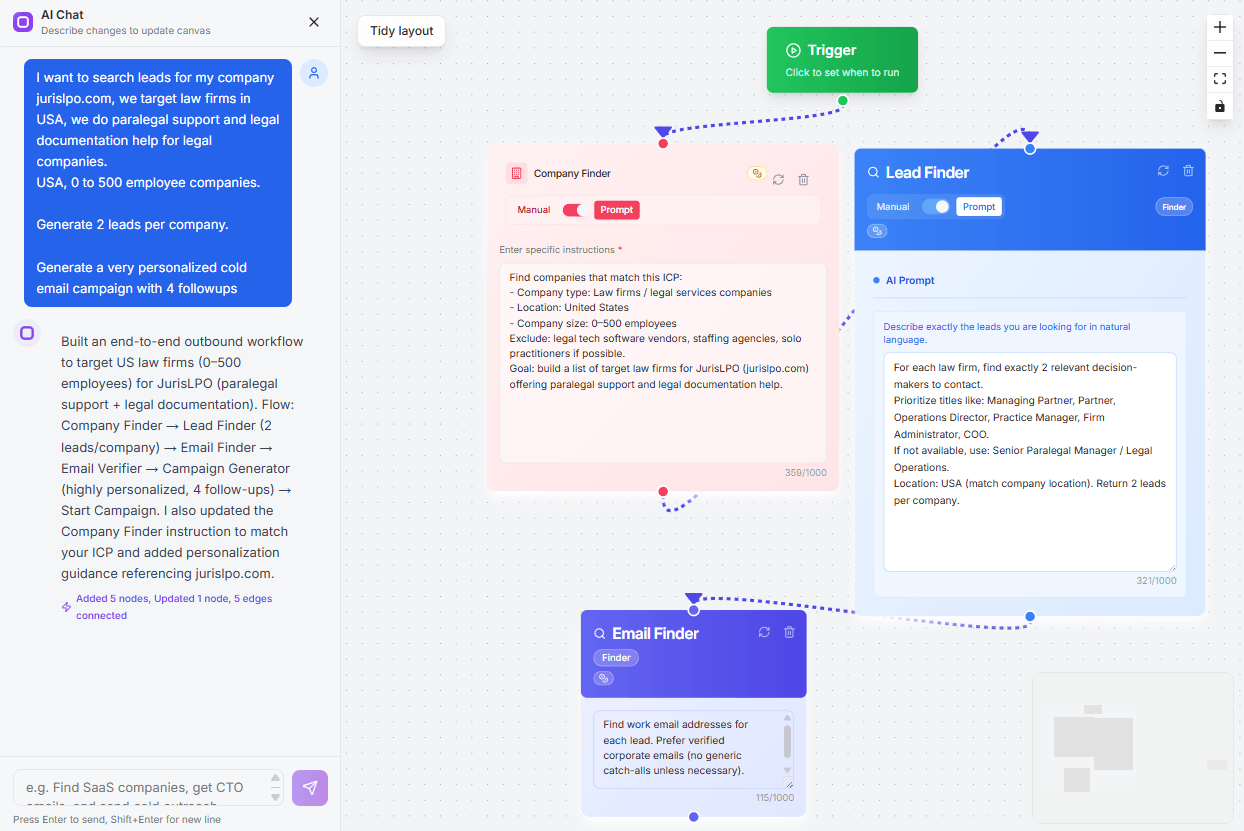
Instead of switching between separate tools for prospecting, enrichment, verification, email writing, outreach, follow-ups, inbox management, and CRM updates, modern sales teams are increasingly moving toward connected outbound systems.
Platforms like Oppora approach outbound differently by using multiple AI Sales Agents that work together across the entire workflow.
Rather than automating a single task, the system can find leads, verify contacts, personalize outreach, manage replies, and sync activity automatically, helping teams scale outreach while maintaining relevance.
This reduces manual effort and creates a more consistent outbound process.
Even experienced sales teams make mistakes that reduce campaign performance.
Watch out for:
Avoiding these mistakes often improves results faster than introducing new tactics.
Cold outreach is not dead.
Generic outreach is.
The most successful sales teams understand that modern outbound depends on relevance, timing, personalization, and consistent execution.
Apply these cold email tips systematically rather than randomly.
Improve your targeting.
Write shorter messages.
Follow up consistently.
Track performance closely.
And most importantly, focus on helping prospects solve real problems instead of pushing products.
When you do that, cold emails stop feeling cold and start creating conversations.
Low reply rates, even with strong subject lines and personalization, often indicate a targeting problem. If prospects consistently show little interest, review your ideal customer profile and focus on companies that closely match your best customers.
Not necessarily. Instead of writing every email from scratch, create messaging for specific prospect segments. This allows you to scale outreach while still keeping emails relevant to each audience.
Most successful cold outreach campaigns use multiple touchpoints across email and other channels. A sequence of 4–6 interactions usually gives prospects enough opportunities to engage without feeling overwhelmed.
If a prospect hasn't responded after several value-driven follow-ups, it's usually best to pause outreach. You can re-engage later when there's a new trigger event, such as funding, hiring activity, or a product launch.
Summarize with AI
Share