Home
Blog
Oppora's Claude MCP is Live. Connect our Email Database & Outreach features with any tool to build smart automations inside Claude. Start for Free
Home
Blog
Adam Hossain
Published May 6, 2026
11 min

Try Oppora AI
Create Self-Running Agentic Sales Workflows like N8N just by chatting with AI
Get Started for FREE
Writing a cold email is easy. Getting it opened is the hard part.
Most people lose the deal in the first line itself because it sounds generic, vague, or just like every other email in the inbox. If your opening doesn’t hook attention immediately, the rest of your email doesn’t even matter.
In this guide, you’ll learn how to fix that and write opening lines that actually get replies:
Before you jump into templates and examples, it helps to understand what actually makes an opening line work.
Because once you get the fundamentals right, you won’t need to rely on copy-paste lines — you’ll be able to create your own that feel natural and still get replies.
The fastest way to lose attention is to delay the point.
When your opening line immediately tells the reader what they might gain, it gives them a reason to keep reading instead of guessing your intent.
Think in terms of outcomes your prospect cares about — more leads, faster growth, better conversions, or saved time.
A strong opening doesn’t introduce you first. It shows what’s possible for them.
Once you’ve hinted at value, curiosity keeps the reader moving forward.
But this isn’t about being vague or clever for the sake of it. It’s about creating a small information gap that feels worth closing.
Instead of revealing everything, you hold back just enough to make them think, “How does that work?”
That small moment of intrigue is often what separates a skim from a reply.
Generic lines get ignored because they sound like everyone else.
Saying “we help businesses grow” means nothing unless you show how, for whom, and with what result.
Specificity builds trust quickly and makes your message feel real.
You can bring this into your opening by focusing on:
The more concrete your statement feels, the easier it is for the reader to believe it applies to them.
Even if your idea is strong, the tone can make or break it.
Overly formal or complicated lines feel like effort to read, and people don’t want to work through an email from a stranger.
A high-converting opening feels like a simple, natural message someone would actually send.
Short sentences, clear wording, and a conversational flow make it easier to process and respond.
When it feels easy to read, it also feels easier to reply.
Suggested Reading:
Best Time to Send Cold Emails by Day, Hour, and Time ZoneNow that you know what makes an opening line work, let’s look at how it actually sounds in practice.
Because understanding principles is helpful, but seeing real examples makes it easier to apply them instantly in your own outreach.
Below, you’ll find 35 cold email opening lines grouped by different angles from outcome-driven to curiosity-based so you can quickly pick what fits your situation and start using it right away.
If you want instant clarity, this is the safest place to start.
Outcome-based lines work because they tell the reader exactly what they might gain without making them think too much. When the value is obvious, attention follows naturally.
Examples:
These lines work best when your results are real, specific, and easy to visualize.
Suggested Reading:
How to Increase Open Rates for Cold Email Campaigns (Without Guessing What Works)Sometimes, saying less creates more interest.
Curiosity-driven lines don’t reveal everything upfront. Instead, they hint at something valuable and let the reader fill the gap by continuing.
Examples:
The goal is simple: spark just enough curiosity to earn the next line.
Sometimes the best way to grab attention is to show what could happen.
“What if” lines work by helping the reader picture a better outcome without directly pitching anything. It feels less like selling and more like exploring an idea together.
Examples:
These lines tap into ambition and possibility, which naturally pulls the reader in.
If your prospect is skeptical, removing risk can make replying feel easier.
Risk-reversal lines reduce pressure and make the interaction feel safe, which lowers resistance instantly.
Examples:
The goal is simple: make saying “yes” feel effortless.
Most inboxes are filled with safe, predictable messages.
A bold claim breaks that pattern and forces attention because it feels different from everything else the reader sees. The key is to sound confident without sounding unrealistic.
Examples:
These lines work because they challenge assumptions and create instant curiosity.
When you tie your offer directly to results, it removes hesitation.
Performance-based lines show confidence by shifting the risk away from the prospect, which makes your message feel more credible and appealing.
Examples:
This approach works best when your delivery can truly back the promise.
When your opening feels tailored, it instantly stands out.
Personal observation lines work because they show you’ve done your homework. Instead of sounding like a mass email, your message feels relevant to the reader’s current situation.
Examples:
The more specific and genuine your observation, the higher the chance they’ll engage.
A simple question can be surprisingly powerful.
Question-based lines invite the reader into a conversation instead of pushing a pitch, which makes them easier to respond to.
Examples:
The goal is to make replying feel like a natural next step.
Sometimes the best way to stand out is to go against what everyone else is saying.
Contrarian lines work because they disrupt familiar thinking and make the reader pause for a second look. When something challenges their belief, curiosity naturally kicks in.
Examples:
These lines create intrigue by flipping the narrative and inviting the reader to reconsider.
If you clearly understand the problem, the reader feels understood.
Problem-aware lines work by directly addressing a frustration the prospect is already experiencing, which makes your message instantly relevant.
Examples:
When you name the problem well, the reader is more open to hearing the solution.
Now that you’ve seen what works, the next step is creating your own lines that fit your offer and audience.
You don’t need to be a copywriter to do this well. You just need a simple way to think about structure and clarity.
Most people start with who they are. That’s where attention drops.
Instead, lead with what the reader might gain. When the outcome comes first, your message immediately feels relevant.
You can always introduce yourself later. The opening line’s job is to earn that chance.
Vague statements don’t build trust. Specific ones do.
Adding numbers, timelines, or real situations makes your claim easier to believe and visualize. It also helps the reader quickly decide if it applies to them.
Even a small detail can make your message feel more grounded and credible.
Long or complex openings create friction.
Your goal is to make the first line effortless to read and understand in seconds. Short sentences, simple words, and clear intent work best here.
If it feels heavy, it probably won’t get read.
There’s no single perfect opening line.
Different audiences respond to different angles — some care about results, others react to curiosity or pain points. The only way to know is to test variations.
Try multiple approaches, track replies, and double down on what consistently works.
Suggested Reading:
9 Cold Email Strategies to Turn Leads Into CustomersWriting a great opening line is one thing. Doing it consistently at scale is where most teams struggle.
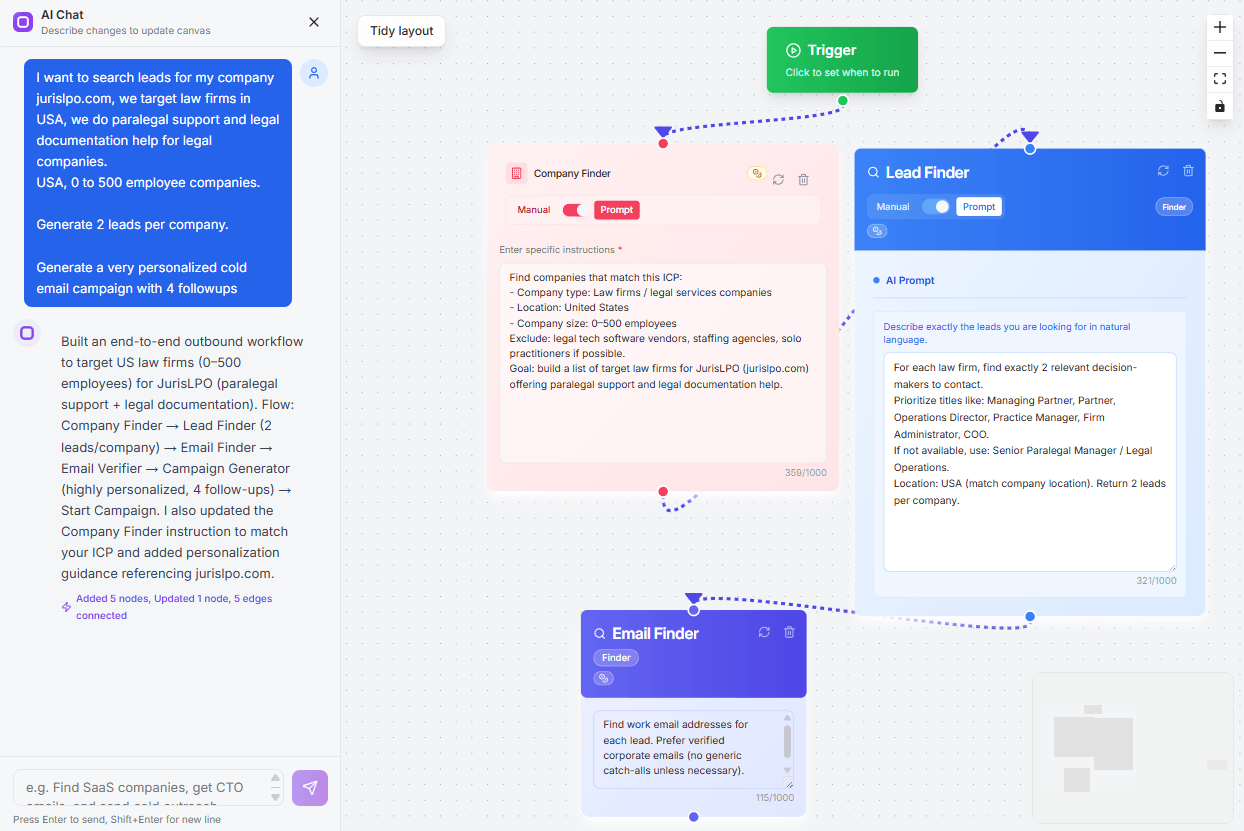
That’s exactly where an AI-powered system like Oppora comes in — not just to write emails, but to run your entire outbound process end-to-end.
Oppora AI acts as a full outbound sales agent that helps you find leads, personalize outreach, and manage conversations without constant manual work.
Instead of juggling multiple tools, you get one system that connects everything together.
Here’s how it supports your cold email workflow:
The biggest difference is how everything works together.
You’re not just generating lines you’re building a system where your outreach runs continuously, adapts based on responses, and improves over time.
So instead of thinking about “what opening line should I write next,” you focus on strategy while Oppora handles execution in the background.
Even small mistakes in your opening line can quietly kill your chances of getting a reply.
Most of them aren’t obvious, which is why they keep showing up in inboxes every day.
This line feels polite, but it adds no value.
It’s overused, predictable, and easy to ignore because it sounds like every other cold email. Your reader has seen it hundreds of times.
If your first line doesn’t stand out, the rest won’t get a chance.
Generic lines don’t give the reader a reason to care.
Saying things like “we help businesses grow” or “we improve results” feels empty without context. It doesn’t show who it’s for or why it matters.
Clarity beats cleverness every time.
Big claims can grab attention, but without proof, they create doubt.
If your opening sounds exaggerated or unrealistic, the reader becomes skeptical instead of curious. Trust drops before the conversation even starts.
Keep your claims grounded and believable.
Long sentences create friction.
When your opening is hard to read or understand quickly, most people won’t try. Cold emails are scanned, not studied.
Short, simple lines are easier to process and more likely to hold attention.
Talking about yourself too early shifts focus away from the reader.
Your prospect is thinking about their own goals, problems, and priorities. If your opening doesn’t reflect that, it feels irrelevant.
Start with them, not you, and your chances of getting a reply increase instantly.
Cold email success often comes down to a single line — your opening.
If you focus on clarity, relevance, and curiosity, you give your message a real chance to be read and answered. The difference isn’t in writing more emails, but in writing smarter ones that connect instantly.
As you test different angles and refine what works, consistency becomes easier and results start compounding over time.
And if you want to scale that process without rewriting every line manually, tools like Oppora can help you turn these principles into a system that runs continuously in the background.
Your opening line should be short enough to read in one glance. Ideally, keep it under 12–15 words. The goal is clarity, not completeness. If the reader has to slow down or reread, you’ve already lost momentum. A sharp, simple line that communicates value quickly will always outperform a longer, detailed one.
Yes, but it doesn’t always mean deep research. Even light personalization like mentioning their role, company activity, or industry can make a big difference. The key is relevance, not effort. If your line feels tailored to their situation, it stands out immediately compared to generic outreach.
In most B2B cases, it’s better to avoid emojis in the opening line. They can feel unprofessional or forced. Casual language, however, works well if it feels natural. Write like you speak, but keep it respectful and clear. The goal is to sound human, not overly creative.
Start with 3–5 variations targeting different angles like outcome, curiosity, or pain points. This gives you enough data without overcomplicating your testing. Once you see which angle performs best, you can refine further within that direction instead of testing everything at once.
Sometimes, but not always. Broad outcome-based lines can work across industries, but the best-performing ones usually feel specific to the audience. Small tweaks based on industry language, challenges, or goals can significantly improve response rates without rewriting everything from scratch.
Summarize with AI
Share